- Uganda’s public health institute advises prompt care for a child with cough and fast or difficult breathing.
- A delivery can collect an empty cylinder as it leaves a full one.
- The alliance reported lower transport costs and fewer regional stockouts.
Inside this story 2 perspectives
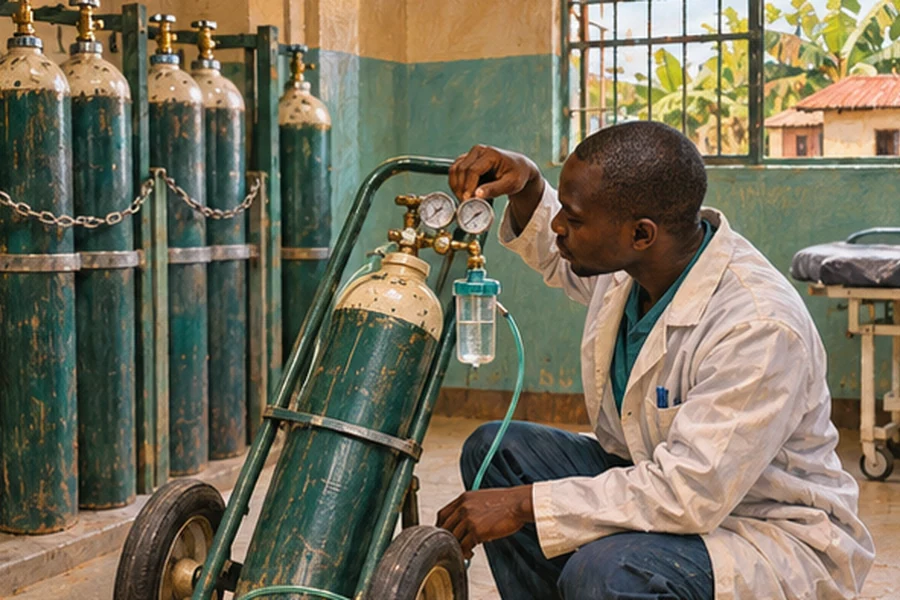
An empty oxygen cylinder has a job to do in Uganda’s health system. When the next delivery reaches a facility, the empty cylinder can go back on the vehicle that brought a full one. It sounds like a small decision about a truck route. For a health worker trying to care for a child whose blood oxygen is too low, the difference between a cylinder waiting to leave and a full one ready to use can be considerable.
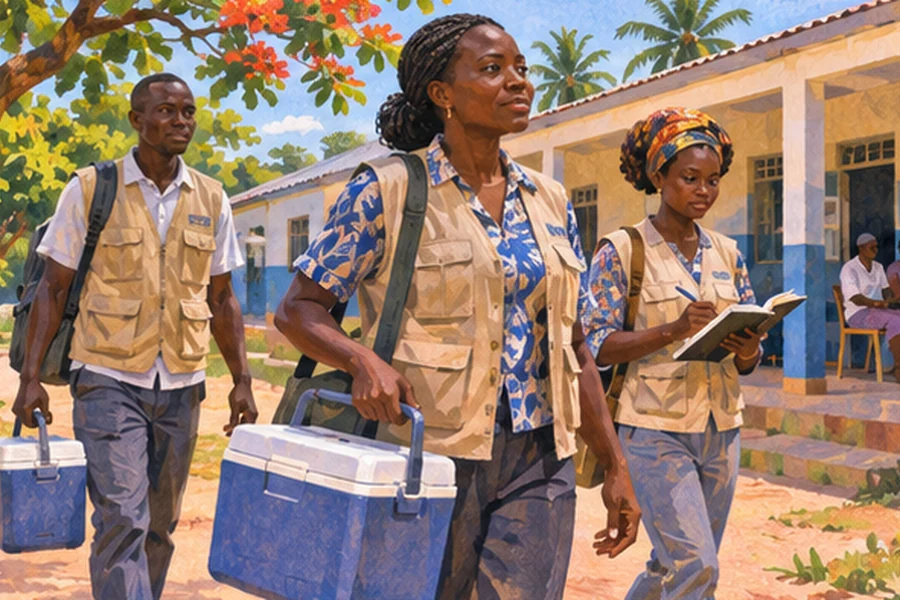
World Pneumonia Day on 12 November brings the beginning of that journey into view. Uganda’s National Institute of Public Health encourages caregivers to seek care promptly if a child has a cough with fast or difficult breathing. It also calls attention to prevention, including vaccination and reducing exposure to household air pollution. Once a family has sought help, the next steps depend on the clinicians and supplies it finds when it arrives.
What travels on the return trip
The Global Oxygen Alliance reported in October that Uganda’s Ministry of Health had adopted an exchange-on-delivery system for oxygen after pilots in Jinja and Mubende. Before the change, the alliance said, one truck and fewer than 5,000 cylinders served the country. A facility can have empty cylinders on hand for days while another part of the system has oxygen available. The two facts can coexist when the arrangements for getting the cylinder refilled are unreliable.
Under the exchange system, the delivery and the collection happen together. The party receiving a full cylinder can return an empty one at the same stop. The alliance reported a 67% reduction in transport cost per cylinder and a fall of more than half in regional stockout rates. Those are measures of distribution. They tell us about cost and availability, while a separate clinical assessment determines what treatment an individual child needs.
Two different questions at the door
For families the immediate question is how quickly a child with worrying breathing can be assessed. A stock report cannot answer that. For a health service manager, the questions extend further. Can staff assess the patient, identify a need for oxygen and provide it at the facility or arrange an appropriate referral? A tally of purchased cylinders answers only part of that sequence. It says little about which are full, where they are now or when the next delivery is due.
Uganda’s oxygen scale-up plan treated supply and distribution as parts of a service, alongside equipment and staff capability. The example of the returning cylinder gives that planning language a concrete meaning. A family who follows the advice to seek care should not also have to solve the problem of a return journey to a filling plant. That is work a health system can do in advance, one exchange at a time.