- WHO confirmed closure of type 2 outbreaks in five African countries on 19 August.
- Guinea-Bissau had received a recommendation for closure in May after an independent assessment.
- Routine immunisation and surveillance remain necessary after formal closure.
Inside this story 2 perspectives
In May, Guinea-Bissau received a recommendation. In August it received confirmation. The difference between the two helps explain how a country reaches the point where it can close a polio outbreak, and why its childhood immunisation services still have work to do afterwards.
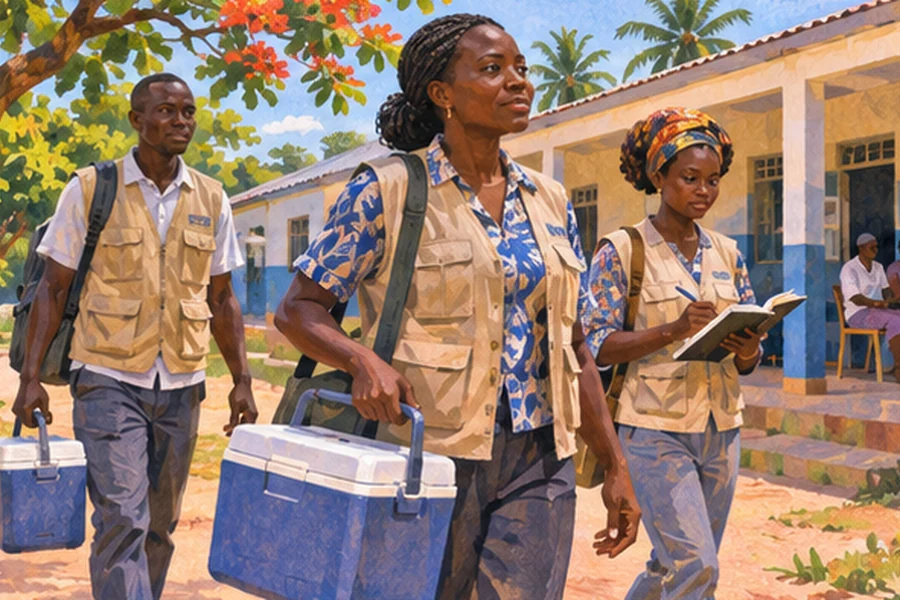
On 19 August the World Health Organization’s African regional office confirmed the closure of type 2 poliovirus outbreaks in Burundi, Ghana, Guinea-Bissau, the Republic of the Congo and Uganda. Independent teams had reviewed the responses in separate assessments from January to June. These were five country decisions supported by local evidence. They did not establish that the threat of polio had disappeared from Africa.
How the dates fit together
Guinea-Bissau had already been certified free of wild poliovirus in 2019. A different event followed in 2021, when officials were notified of detections of variant poliovirus type 2. The two descriptions matter. Certification concerning wild poliovirus was never a guarantee that the country would have no future outbreak of any type.
The country declared the later outbreak a public health emergency in March 2022. Health authorities organised supplementary immunisation rounds in April and June that year. In May 2026 WHO reported that an independent team had examined the response and found no evidence of continuing transmission. The team recommended formal closure. August’s announcement confirmed it alongside the decisions for the other four countries.
For a parent looking at a child’s vaccination record, outbreak dates and routine appointments answer different questions. The dates describe what authorities concluded about a particular event across a population. The record shows which routine doses an individual child received. A change in the first does not fill a gap in the second.
Why confidence requires continued observation
A health service that hears of no new cases might be seeing a welcome improvement. It could also be receiving fewer reports from some communities. An assessment therefore considers whether the system was capable of noticing a problem during the period in question, as well as what it did and did not report. WHO said the teams examined evidence about immunisation, surveillance and the response to the outbreaks.
Guinea-Bissau’s history makes that question tangible. Detection set a response in motion. Community engagement and vaccination helped bring it towards a conclusion. A separate assessment tested whether there was enough evidence for that conclusion. Closing the outbreak recognises the combined work of families, health workers and authorities over several years.
The continuing task is to make routine vaccination reachable for children who missed it and to keep staff able to report concerns. Those services may attract less attention than an emergency campaign, yet they are precisely what makes an official announcement of this kind worth trusting.