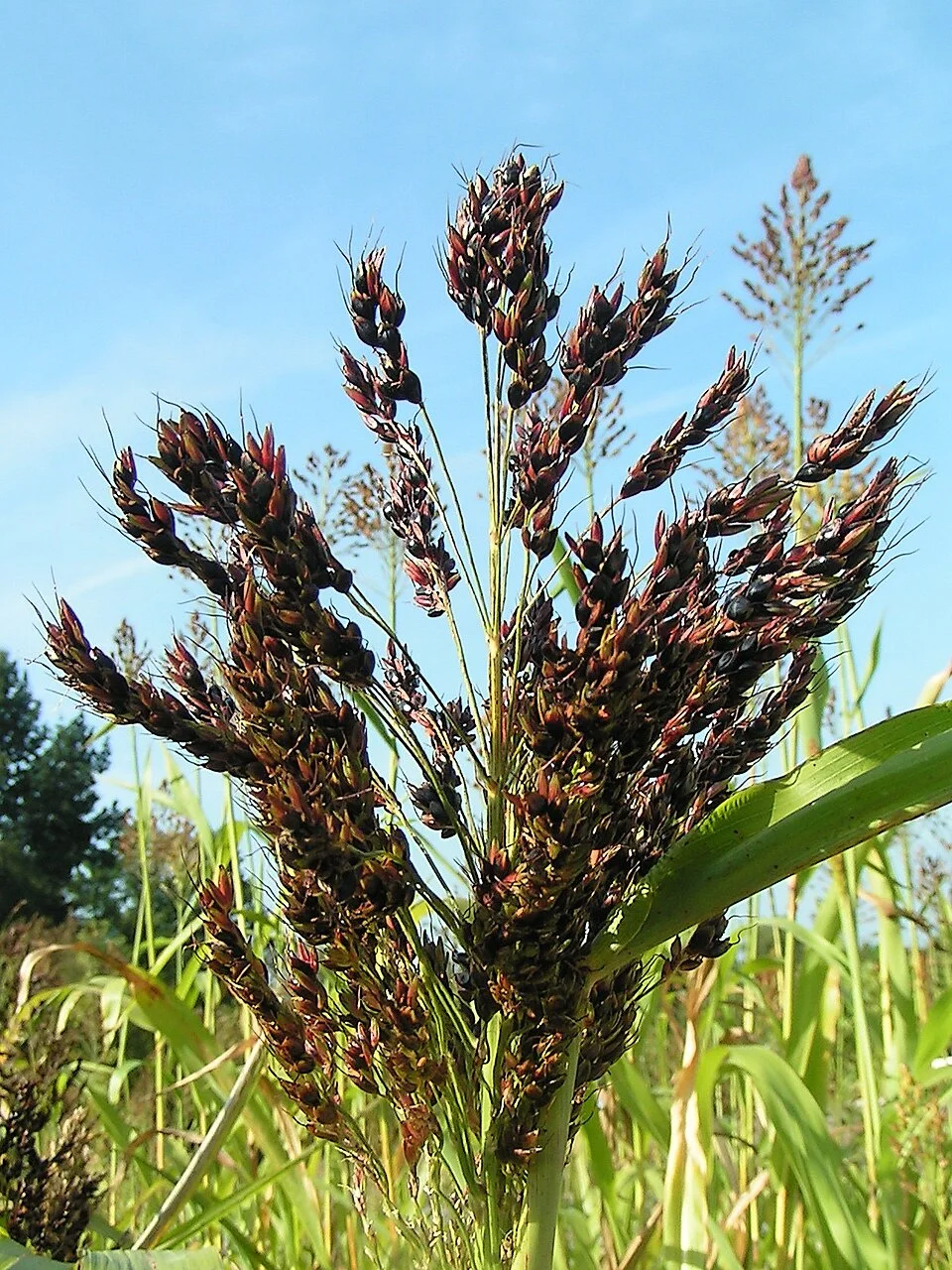
- The team used high-resolution microCT to map the interior of living sorghum leaves.
- Leaves with fewer surface pores had larger air spaces underneath them.
- The images and modelling do not establish field yields or farm irrigation savings.
Inside this story 2 perspectives
Counting the openings on the surface of a leaf sounds like a reasonable way to estimate how easily gas can move through it. A study of sorghum offers an awkward wrinkle. Leaves with fewer openings had larger air spaces immediately beneath them. The inside of the leaf differed along with the outside, and the resulting models indicated that carbon dioxide could still move through the internal pathways about as effectively.
The University of Illinois highlighted the research on 11 August, following its publication in Plant Physiology in June. James Fischer and colleagues used high-resolution X-ray micro-computed tomography to look inside intact, living sorghum leaves. A collection of scans taken from different angles allowed them to reconstruct a three-dimensional image. The advantage over an ordinary photograph is much the same as the advantage of a floor plan over the view of a front door. The opening is visible in either. What lies behind it is harder to infer from outside.
The plant has two things to exchange
During photosynthesis, carbon dioxide has to reach the cells that use it. Carbon dioxide enters through pores called stomata, and water vapour can escape through the same openings. Any attempt to curb the loss of water therefore raises a question about the other part of the exchange. A leaf that conserves water but sharply restricts the carbon reaching its cells may have made a poor trade.
Researchers were interested in the route beyond the pore. They compared leaves with different numbers of stomata and used the scans to examine how their internal air spaces were arranged. The larger spaces beneath the fewer openings helped compensate for the reduced number of entry points. Instead of treating the leaf as a sheet punctured by holes, the team could examine an interior in which several connected structures changed together.
A useful result with a field test still ahead
Sorghum makes the question commercially relevant. The ability to keep carbon moving as water becomes scarce is of interest wherever producers have to manage unreliable rainfall. A grower, however, buys seed and ultimately harvests grain or biomass. The price of water, the timing of a dry spell and conditions through a full season all affect that calculation.
The study did not report an irrigation saving per hectare for farms, nor did it establish how grain yields change across producing regions. It supplied a better description of a mechanism and a way to compare leaves whose surfaces might otherwise be misleading. That is a specific advance along a much longer path.
It also suggests a more informative question for the next round of crop testing. When two plants differ in the number of openings they expose to the air, how are the internal spaces arranged that have to finish the job? The X-rays make that previously hidden part of the calculation visible.