- IC 342 is also known as Caldwell 5.
- Dust between Earth and the galaxy obscures visible light.
- Euclid previously used near-infrared observations to investigate its stellar population.
Inside this story 2 perspectives
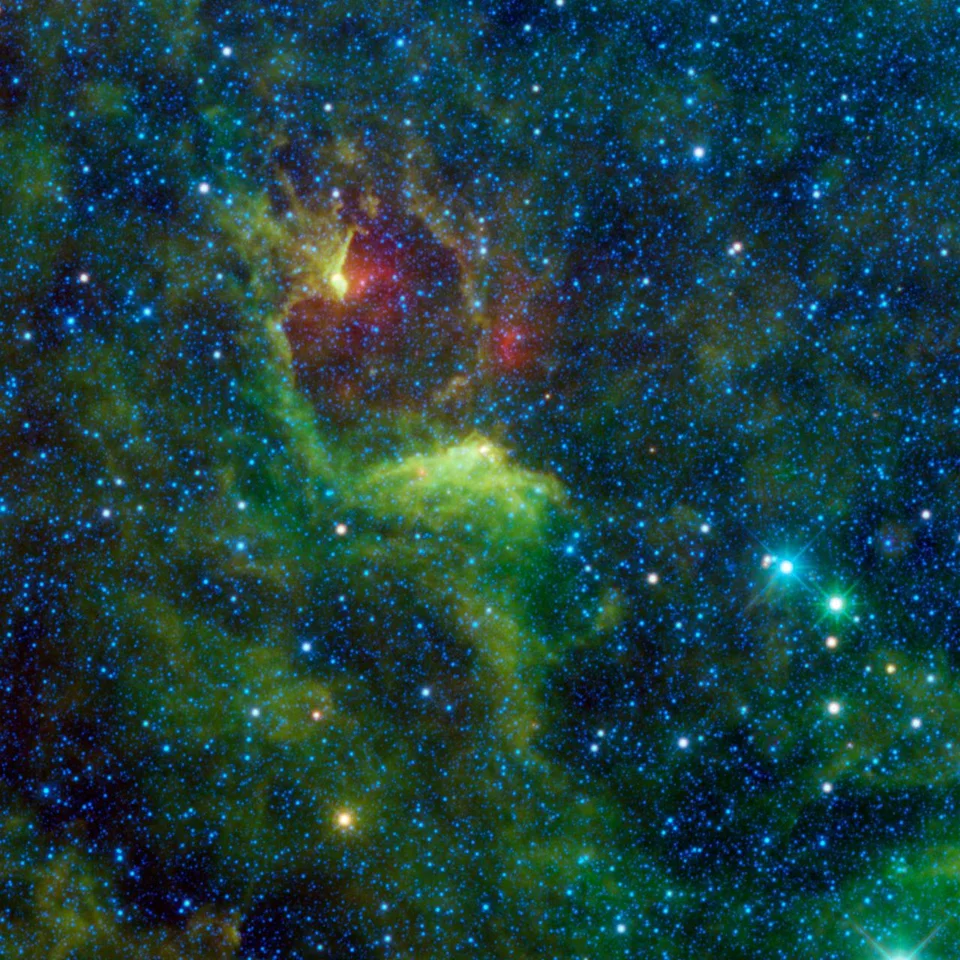
A galaxy can be relatively close to Earth and still be a nuisance to photograph. Point a telescope at IC 342 and it looks straight through a congested part of the Milky Way. Some of what meets the detector is nearby starlight. Some is light from another galaxy, altered on its long journey by dust much closer to the observer. Distance alone gives no warning about either problem.
On 4 November, NASA's Astronomy Picture of the Day featured an image by Artem Mironov that looks through that foreground. IC 342, also catalogued as Caldwell 5, is a spiral galaxy roughly ten million light-years away. It belongs to a group near the Local Group, the family to which our Milky Way belongs. To call it the Hidden Galaxy describes the accident of where we live. An observer elsewhere in the universe would have different material in the way.
Where does the dust belong?
The challenge is more subtle than taking a dark veil off a picture. Some dust in this field belongs to our own galaxy. IC 342 contains dust of its own, which can hide the glow of gas associated with young stars. The location of the material changes what it tells an astronomer. A patch in the foreground can obscure an object of interest. A dark feature in a spiral arm can be part of the object the astronomer is trying to understand.
The distinction has mattered beyond the appearance of a photograph. NASA's editors note that past interpretations of the crowded foreground contributed to the idea that IC 342 had been thrown out of the Local Group. Reconstructing a galaxy's history from its light means asking what happened to that light after it left home.
A second way to see the same neighbourhood
There is a useful companion to Mironov's November image. In earlier observations, the European Space Agency's Euclid mission trained its instruments on the same galaxy. Its near-infrared instrument could see through more of the dust and measure light from relatively cool, low-mass stars. ESA explains that those stars account for much of the galaxy's stellar mass. The brightest points in a visible picture and the stars carrying much of the mass answer different questions about the same place.
Hubble's Caldwell catalogue also describes IC 342 and its difficult position against our own galactic plane. Compare the three accounts and the nickname begins to do some work. Hidden from whom, and at which wavelength? The November photograph rewards a long look. The older observations explain why even a very good photograph leaves an astronomer wanting another kind of instrument.