- NASA awarded the Arizona-led team US$20 million for PUFFINS.
- The planned instrument will study ultraviolet polarisation along about 70 stellar sight lines.
- A spectral feature around 217.5 nanometres is among the questions the mission aims to explore.
Inside this story 1 perspectives
When a star looks fainter than expected, dust between it and Earth may be part of the explanation. For the team building PUFFINS, that dust is the object of interest. The University of Arizona announced on 6 October that NASA had awarded its team US$20 million for a small space telescope designed to observe how interstellar material changes ultraviolet light. The planned sample is about 70 stars, each offering a different line of sight through the galaxy.
The instrument will use a telescope roughly 25 centimetres across. It belongs to NASA's Astrophysics Pioneers programme, which supports investigations small enough to pursue a focused question with a smaller mission. Arizona's Steward Observatory is leading the work with partners including the University of Texas at Austin's McDonald Observatory and an international team. The announcement is about building the instrument. It does not yet contain observations from the mission.
What the light carries
Light has a property called polarisation, which describes the orientation of its oscillations. If many elongated dust grains along a line of sight are aligned in a similar way, they can affect different orientations of light unequally. An astronomer who measures only how bright the star appears misses that directional information. Measuring polarisation across different wavelengths can tell researchers more about the intervening material.
This combination of measurements is called spectropolarimetry. PUFFINS will make it in the ultraviolet, where small dust grains affect starlight in ways that are difficult to study using visible light alone. The mission team identifies a feature near 217.5 nanometres as one of its targets. Astronomers recognise that feature in the way interstellar material dims light. Its polarisation along different sight lines may help distinguish between explanations for its origin.
Consider why the team wants dozens of stars. A single measurement has to be understood in the context of the particular path the light travelled. If similar changes show up along several paths, researchers can ask what the environments share. If the changes differ, that variation can help expose assumptions a one-star observation might leave untouched. A small telescope can do meaningful work when the question and the measurement are closely matched.
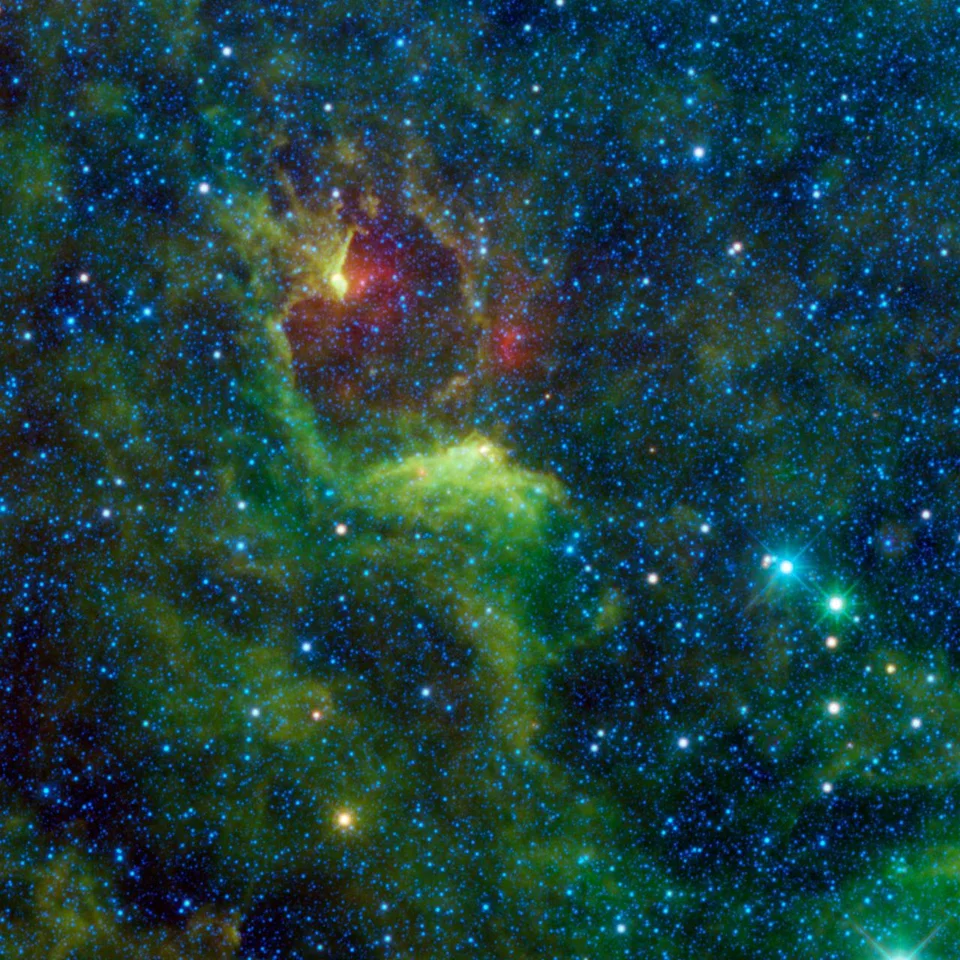
Dust is also part of the material from which later stars and planets form. Learning how the smallest grains change between environments matters well beyond correcting the apparent brightness of a distant source. The next step for PUFFINS is to turn a funded instrument design into a working space mission. Its eventual result will depend on something people looking up at night rarely consider: how much the material between them and a star has already written into the light that reaches them.