- McGetchin crater formed between two observations made in April and May 2024.
- The crater is 222 metres across and the surrounding thermal change spans roughly seven kilometres.
- Nighttime temperatures in the affected region were around 8–9°C lower than in nearby terrain.
Inside this story 2 perspectives
A person looking for a new crater on the Moon might expect the most important measurement to run from one side of the hole to the other. At McGetchin crater that distance is 222 metres. A second measurement, taken by watching how the surface cools at night, stretches about seven kilometres across. The impact changed something well beyond the outline its rim draws on a map.
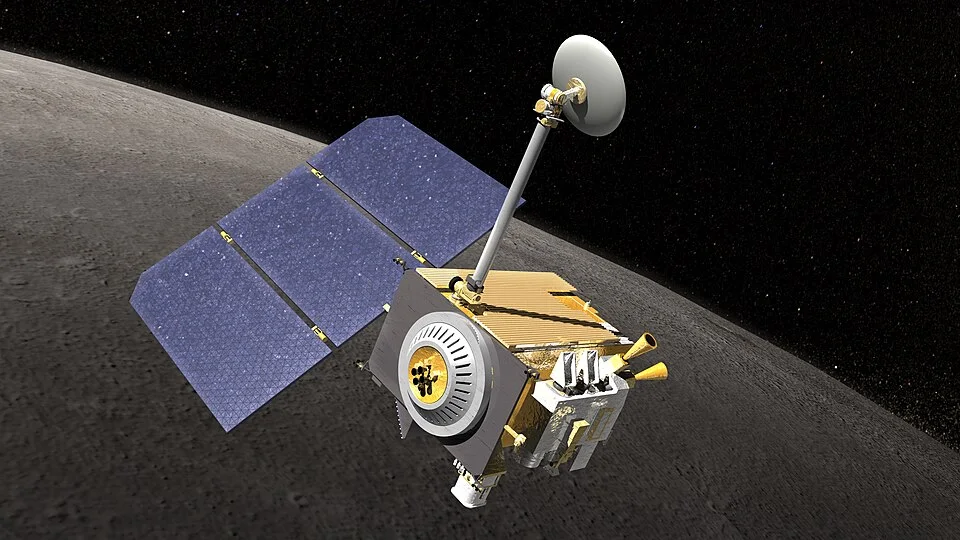
The SETI Institute scheduled an 8 October discussion with planetary scientist Tyler Powell, lead author of a study of the site. The crater formed between 11 April and 22 May 2024, within the lifetime of NASA’s Lunar Reconnaissance Orbiter. Researchers had observations of the location before the impact as well as after it. That makes the site unusually useful for understanding what one event does to a surface already marked by countless older impacts.
What darkness adds to an image
Sunlit images can reveal a fresh rim and material thrown around it. Nighttime temperatures offer different information. The Moon’s surface is covered with regolith, a loose layer of dust, rock fragments and debris. A surface’s ability to take in, store and release heat depends partly on how its material is arranged. Disturbing that material can change how quickly the ground cools after sunlight moves on.
The researchers found a region surrounding the impact that was about eight to nine degrees Celsius colder at night than nearby terrain. A visible crater wall cannot account by itself for a temperature difference extending over such a broad area. The observations indicate that the impact affected the surface outside the hole, changing its thermal behaviour. They do not mean the crater itself measures seven kilometres across.
The advantage of having a before picture
Many lunar craters are far older than the instruments used to examine them. Scientists can compare one surface with another and infer which features look younger, but they cannot return to the same ancient spot before it was struck. At McGetchin the orbiting spacecraft had already been collecting data. Researchers could narrow the formation date between visits and examine the changed landscape against an earlier record.
The interval still leaves an uncertainty. It does not supply the exact time of impact or a film of the material being disturbed. Observations at different wavelengths and different times of day help scientists reconstruct the sequence without pretending that every part was directly witnessed.
That distinction is also what makes the much wider cold region interesting. In daylight a viewer can point quite precisely to the rim of the hole. After dark the disturbed ground has another boundary altogether, one that can be found only by asking how the landscape releases heat.