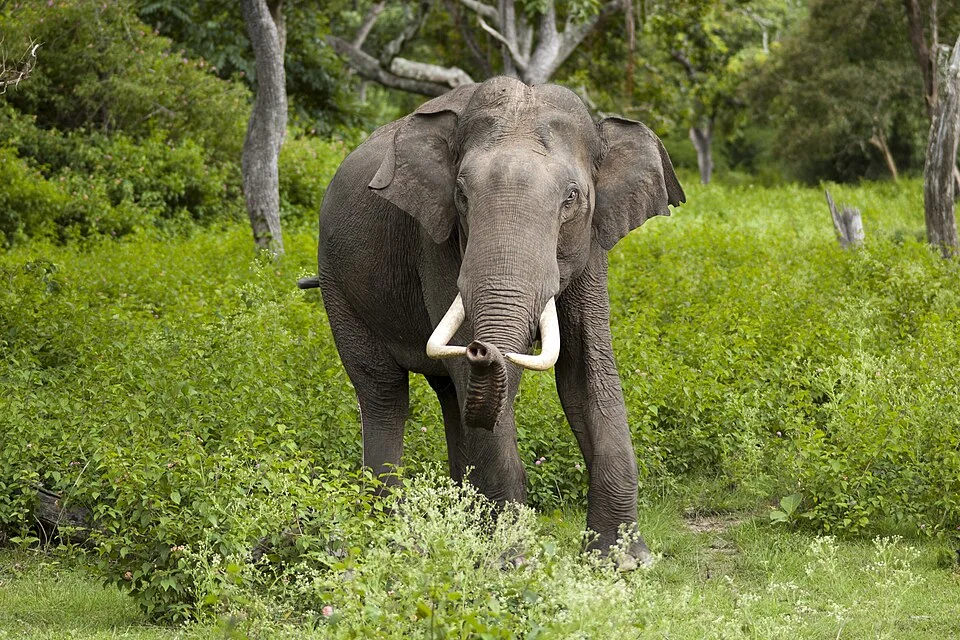
- India’s first national DNA-based estimate put its wild Asian elephant population at 22,446.
- A repeat encounter helps researchers model the animals they may have missed.
- A survey using a different method can establish a new baseline without establishing a change since an older count.
Inside this story 2 perspectives
A second trace of the same elephant can be as useful to a population scientist as a first trace of a new one. It tells the survey team that an animal it encountered before has turned up again. The locations and frequencies of such encounters help researchers estimate how many elephants may have left no trace in their sample at all.
For World Elephant Day on 12 August, the Indian government revisited a figure published in 2025. Its national assessment estimated 22,446 wild Asian elephants. The Wildlife Institute of India used genetic evidence from dung alongside field observations in the country’s first national survey of this kind. That produced a valuable reference point for conservation. Reading it as a straight update to the previous national total, published under a different counting method, is much harder.
The animal without a name tag
An elephant can move across a survey boundary; the field team cannot ask whether a colleague in the next area has already seen it. Trees and terrain can hide other animals entirely. A genetic signature can connect two samples left by the same elephant, even when nobody has had a clear view of the animal. That helps researchers distinguish a new encounter from a new individual.
The principle also explains why adding up distinct signatures alone would give an incomplete answer. Think of two routes through a forest, each with evidence of animals that use it. Where there is overlap, the survey has some information about how often it encounters the same animals. Scientists combine that information with where the samples were found to model the broader population. An uncertain estimate is more informative than a claim that every elephant has been located.
When the ruler changes
The previous national estimate used a different approach. Publishing a smaller central estimate with a new design does not establish that the difference represents animals lost in the intervening years. Differences in how often a method can detect an elephant, which landscapes it covers and how it handles repeated sightings can all affect the result. The government and researchers identified the new survey as a baseline against which future comparable estimates can be assessed.
The distinction matters to decisions about habitat. A national total cannot by itself show where an elephant’s route is blocked or which villages experience the greatest conflict with the animals. Movement records and local observations can help planners answer those questions. Repeating the survey in a comparable way can then tell conservationists something about change through time. The extra trace from the same elephant earns its place twice: it helps improve today’s estimate and makes tomorrow’s comparison more meaningful.