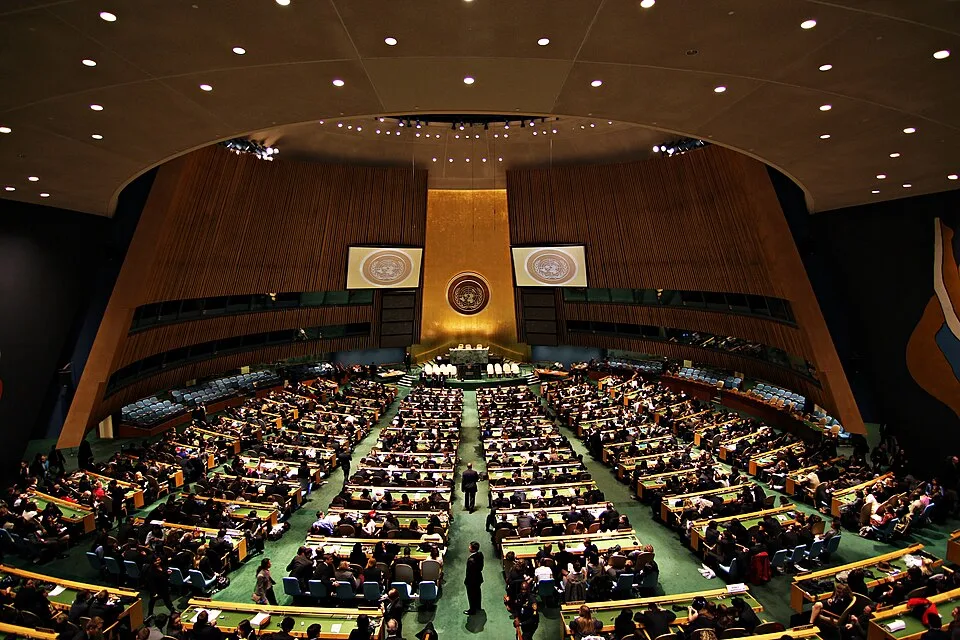
- The 24 October observance marks the entry into force of the UN Charter in 1945.
- The General Assembly adopted the Universal Declaration with 48 votes in favour, none against and eight abstentions.
- A resolution adopted without a vote produces a different kind of record from a recorded roll call.
Inside this story 2 perspectives
The United Nations General Assembly adopted the Universal Declaration of Human Rights in 1948 without a single vote against. If that sentence becomes “every country voted for it,” a fact has been lost in the retelling. The contemporary voting record gives 48 votes in favour and eight abstentions. The difference is small enough to disappear from a caption and important enough to change its meaning.
United Nations Day, marked on 24 October, commemorates the date the UN Charter entered into force in 1945. It offers a useful reason to learn where the organisation keeps its evidence. The General Assembly’s voting records can answer precise questions about how a delegation acted. They work best when the reader first identifies which body, which document and which decision is at issue.
Look for the decision before looking for the country
A proposal can pass through a committee before the General Assembly considers it in plenary. Changes to individual paragraphs or amendments can be voted on separately from the final text. A report that a country voted against one amendment does not establish how it voted on the eventual resolution. Start with the title and document symbol, then match the vote to the date and stage of the decision described.
The Dag Hammarskjöld Library maintains a guide to General Assembly voting and directs readers to the UN Digital Library. For a recorded vote, the summary can distinguish votes in favour, votes against, abstentions and members that did not vote. An abstention records a specific choice. A missing vote is a different category. Neither, by itself, explains the political reason behind a delegation’s action.
When the table is missing
The library notes that most General Assembly resolutions are adopted without a vote. In such a case, the absence of a country-by-country table is entirely compatible with the official record. Wording that says a text was adopted without a vote preserves what happened. Assigning an individual affirmative vote to every delegation would create a record the proceeding never generated.
Sometimes the relevant follow-up is why a country acted as it did. A meeting record, an explanation of vote or a contemporary diplomatic report may address that question. The UN Yearbook records the count on the Universal Declaration, while Australia’s diplomatic archives preserve its delegation’s perspective. Those sources can sit beside each other because they serve different purposes. Checking what was counted, and then who explained it, is a habit that travels well beyond one anniversary or one historic vote.