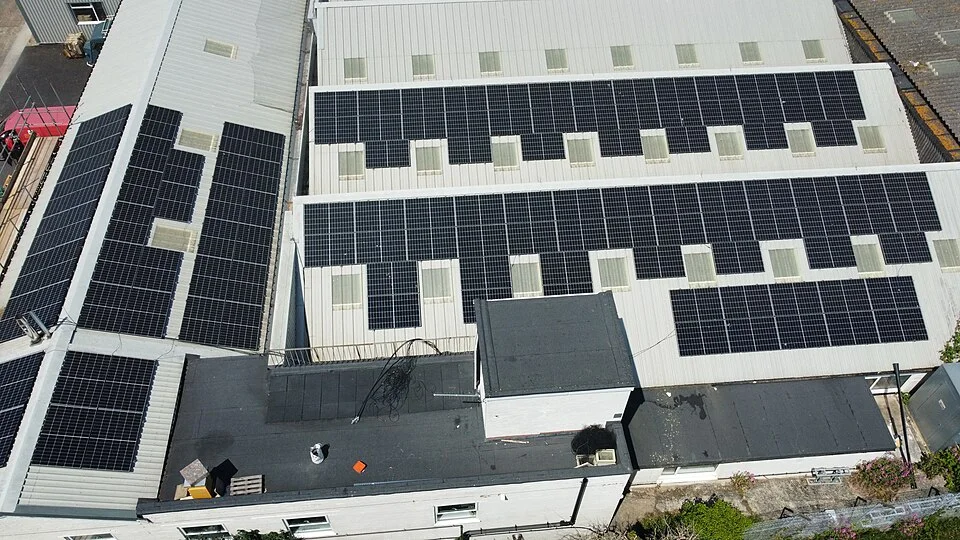
- The 2024 field trial compared two semi-transparent panel designs with an open plot.
- The crops under the panels reached comparable fresh biomass but matured 25 days later.
- The best measured radiation-use efficiency was up to 4.5 times higher. That is a measure per unit of light, not four times as much broccoli.
Inside this story 2 perspectives
If a field of broccoli produces a similar amount of fresh plant matter but takes 25 extra days to do it, has the experiment succeeded? In a Swedish trial reported on 2 October, there was a second harvest to consider. Semi-transparent magenta panels above the plants were generating electricity while letting some of the incoming sunlight through to the crop.
Silvia Ma Lu of Mälardalen University and colleagues tested two panel designs on a Swedish farm in the 2024 growing season. Each installation covered a plot twenty metres by twenty metres. A third plot grew broccoli in the open. The researchers tracked conditions including soil moisture, humidity and air temperature, alongside photosynthesis, crop performance and nutrient composition. The question was how productively the field could share sunlight between two very different uses.
The denominator is the light
The panels let through light in wavelengths useful to the plants, with different amounts of transmission in the two designs. The researchers report average transmission of photosynthetically active radiation of 13.2 per cent in one design and 19.2 per cent in the other. The resulting light environment was quite different from open ground. A calculation of how much growth a crop achieves for each unit of light it receives will take that smaller denominator into account.
Under the panels the plants' radiation-use efficiency rose by as much as a factor of 4.5. A farmer cannot multiply the open plot's harvest by that number to estimate what the panel-covered plot produced. The protected plants took longer to mature and ended up with fresh biomass comparable to the plants in the open. Nutrient composition also supplied a separate result. Most measured macronutrient concentrations were similar, while concentrations of micronutrients declined.
A calendar also has a yield
Twenty-five extra days can matter in an enterprise that has to schedule staff, deliver produce to a buyer or plant a following crop. The field also supplies electricity during that interval. The value of the combination would depend on local growing conditions, the revenue or savings from the electricity and the consequences of harvesting later. A grower with space under a greenhouse roof may face quite different trade-offs from one managing a succession of crops in an open field.
The two designs produced broadly similar broccoli results despite the difference in panel transparency. That finding gives researchers a reason to test how tightly the panels can be arranged in different settings. It comes from one crop and one field season. Repeating the comparison across sites and years would help establish whether the extra wait is predictable and what it buys. On the Swedish plots, any account of success already needs room for two measurements and a date on the calendar.