- Siena postponed the Palio and historical procession on Sunday, 16 August.
- A green flag at the Palazzo Pubblico communicated the decision to people in the square.
- The city provisionally moved the programme to Monday, subject to the weather.
Inside this story 2 perspectives
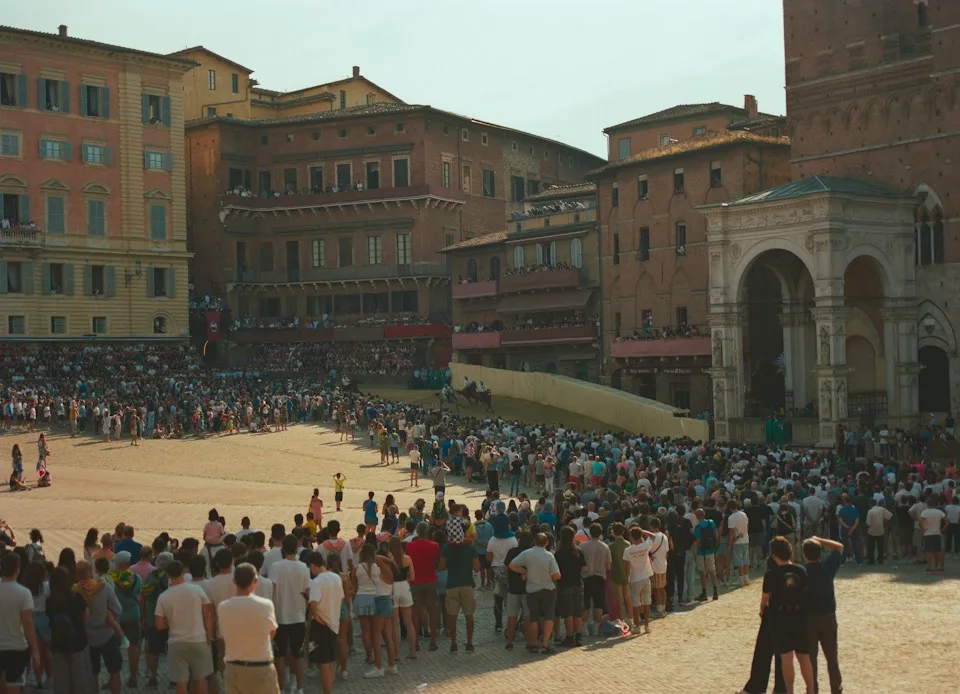
The signal for visitors in Siena’s Piazza del Campo on 16 August came from a window of the Palazzo Pubblico. A green flag went up. In this particular square, on this particular occasion, that meant the horses would stay away. Rain had begun to fall at about two in the afternoon, and the city said it was impossible to proceed with either the historical procession or the Palio itself.
The decision was about the surface under the horses. The race takes place on a temporary track laid around the square. Rain can compromise its footing and create danger for both horses and jockeys. The Italian news agency ANSA noted that other recent editions had also been put back because of the weather, including the July race earlier this year. An annual date on a travel itinerary, however firmly printed, could never guarantee an evening start.
Reading an empty square
The city initially moved the programme to Monday, 17 August, weather permitting. Its notice set out the sequence that visitors would otherwise have seen on Sunday. Warning signals precede the clearing of the track. A mounted Carabinieri detachment and the historical procession enter the piazza before the horses emerge from the courtyard. The horses were due out at seven in the evening under the provisional timetable.
For someone planning to watch from the centre of the square, the entrance matters as much as the starting hour. The city’s notice specified entry from Via Dupré between four and six, subject to capacity. Someone arriving in time for the horses could therefore already have missed the opportunity to enter. A visitor making a second journey would also need to check the city’s revised instructions if it rained again.
The prize has a history before it has a winner
One element of the August Palio was already complete. On 10 August, the city unveiled the Drappellone, the painted banner that ultimately goes to the victorious contrada, or district. This year Romanian artist Teodora Axente made the work, dedicated to the Virgin of the Assumption and marking five hundred years since the Battle of Camollia. The city says it will eventually enter the winning district’s museum.
The postponement puts those objects into an unusual relationship. One flag, raised at the town hall, said that no contest could take place that day. The other, made for a neighbourhood that had yet to win it, could wait. For visitors who had come expecting only a horse race, the afternoon offered a lesson in how Siena communicates with a crowd and what its districts take home when the horses finally run.