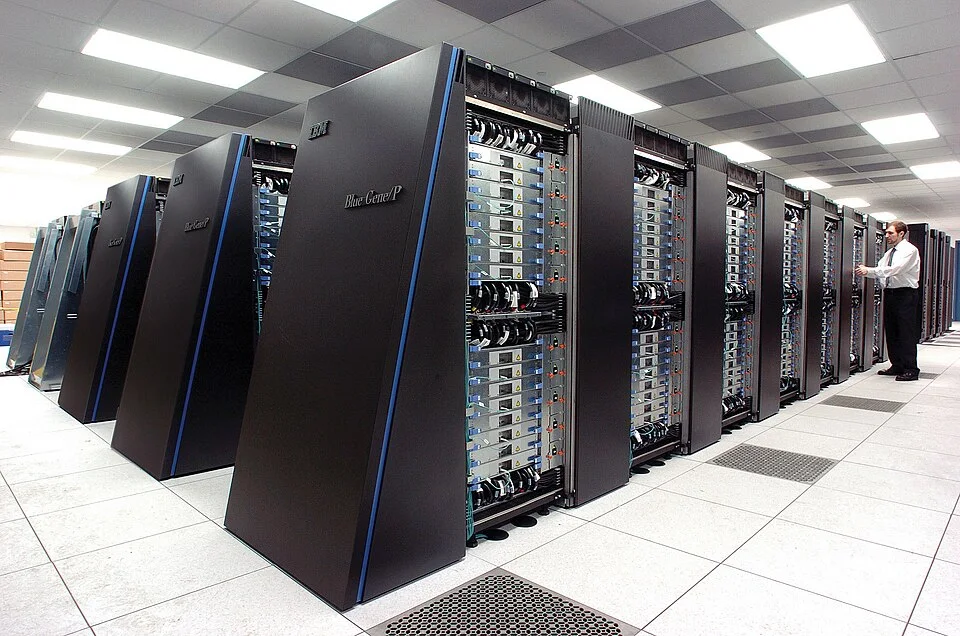
- Shunkai initially uses about 50 physical qubits.
- The system integrates software, atom control and camera-based readout.
- A much larger fault-tolerant system is a programme goal for 2031.
Inside this story 2 perspectives
A software researcher writing a quantum calculation needs more than a collection of carefully controlled atoms. Someone has to turn the instructions into signals the atoms can respond to, read the result and translate it back into a form the researcher can use. Japan’s Institute for Molecular Science announced on 24 August that Shunkai, its first full-stack neutral-atom quantum computer in the country, is operational. The claim rests partly on joining those pieces together.
The project is led by Kenji Ohmori at the institute, with Hitachi involved in the software and Infleqtion in the quantum processing unit. The team says Shunkai will initially use about 50 physical qubits and is intended to expand to roughly 500. A further programme goal for March 2031 is a substantially larger machine with 10,000 physical qubits and error detection and correction capabilities. The announcement does not put either of those future machines on a researcher’s desk today.
How an atom returns an answer
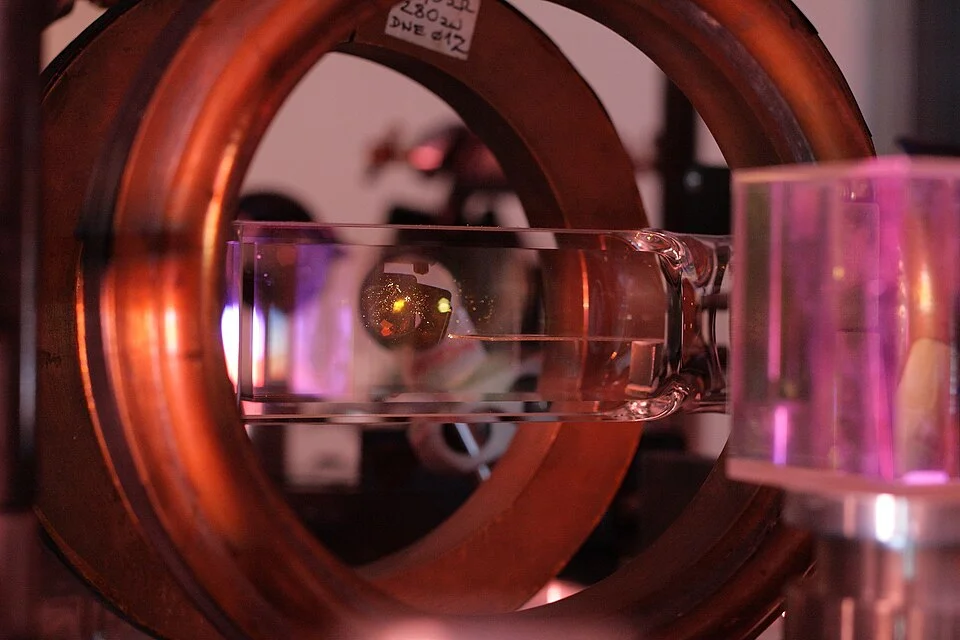
In this type of computer, an individual neutral atom carries a qubit. The system uses tightly focused laser light to hold atoms in an array. Other controls change their quantum states and allow operations to be carried out. At the end, a camera records light emitted by the atoms so the machine can interpret a result. Each layer has to cooperate with the others. A software instruction that cannot be translated reliably into a physical operation is of little value to the user.
Shunkai takes its name from an alternative reading of the given name of Harumi Shibukawa, the Edo-period astronomer who established a Japanese calendar system. It is an apt choice for an instrument that depends on precise observation. In this case, the crucial observation is often whether a calculation behaves consistently enough to support the next experiment.
More physical qubits are only part of the story
A programme trying to produce reliable quantum computation must deal with imperfect operations and the fragility of quantum states. A higher count of physical qubits can create room to test different methods of detecting errors. It does not alone establish how long a useful calculation will survive or whether a particular task runs better than it would on an existing conventional computer.
That is why the institute’s plan for partial access by external researchers may matter as much as the headline number. Researchers working on software or error correction can learn from the gap between how an algorithm behaves on paper and how it behaves on a machine with real controls. The conditions and scope of access still determine which experiments they can run.
Shunkai’s first achievement is concrete enough. A research team has assembled the chain from a user’s input to a measurement from a Japanese neutral-atom system. How far that chain can scale without losing accuracy is precisely the question the operational machine now allows researchers to investigate.