- Einstein Probe recorded an X-ray flash from a galaxy about 500 million light-years away.
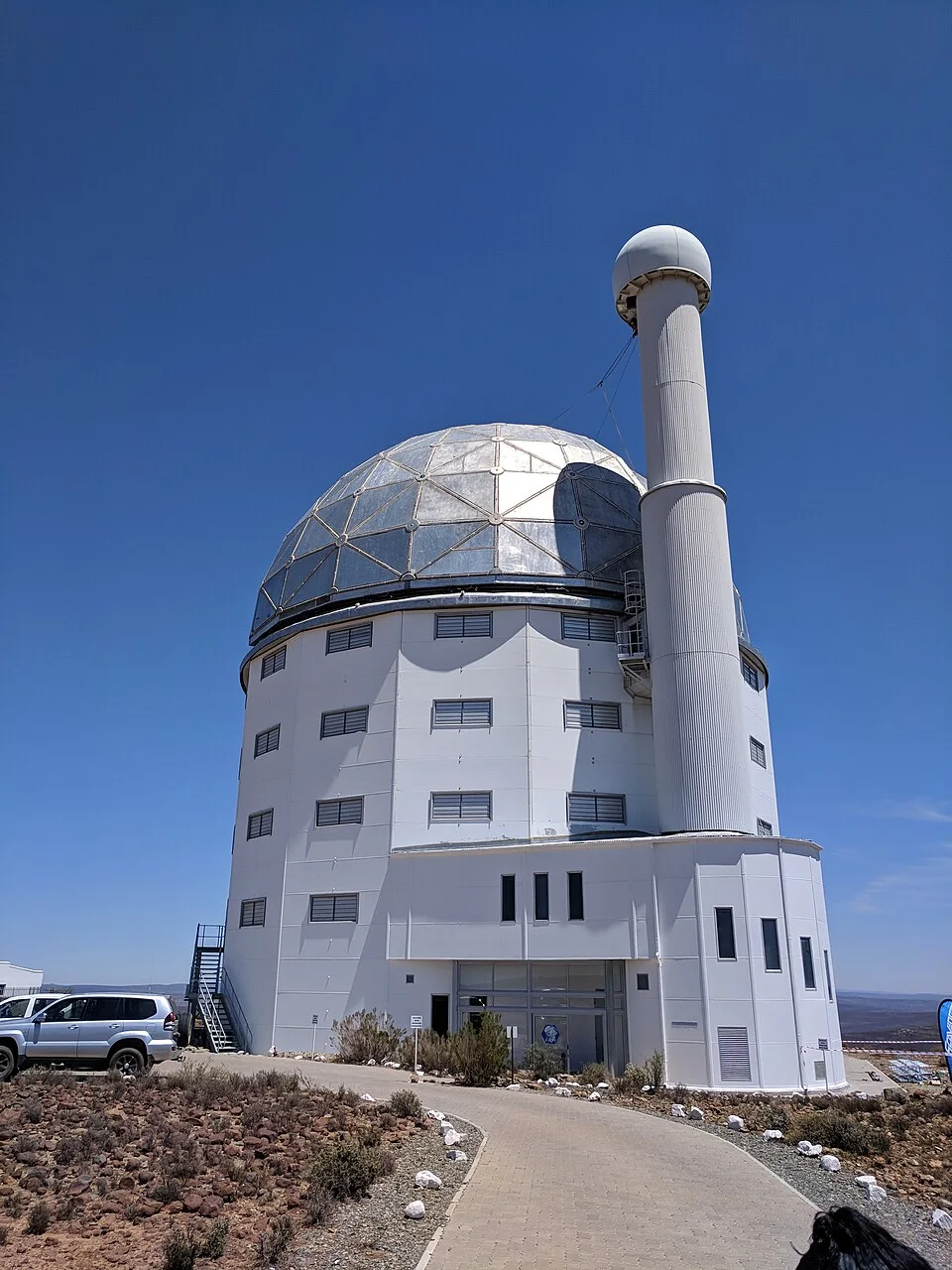
- SALT obtained eight spectra over nearly two months.
- Teams found no evidence of a gamma-ray burst accompanying this broad-lined Type Ic supernova.
Inside this story 2 perspectives
The first clue arrived as a brief flash of soft X-rays. The Southern African Large Telescope’s contribution took considerably longer: eight observations, spread over nearly two months, that separated the light of the source into its different wavelengths. Together the short signal and the long watch helped tell a story neither could have supplied alone.
In March the Einstein Probe spacecraft detected the flash from a galaxy about 500 million light-years away. Ground-based telescopes began following the source within an hour. Astronomers named the supernova SN 2026gzf. In results released in August, two research teams independently interpreted the original X-rays as the moment a shock wave from the exploding star broke through its surface. That is a short-lived stage for which it is particularly difficult to catch the right patch of sky at the right time.
A changing spectrum leaves a record
An ordinary photograph can tell an astronomer that a point of light has brightened. A spectrum breaks that light into wavelengths and reveals features that reflect the material involved in the explosion and its motion. Repeating that observation as the event evolves can help scientists test whether an early interpretation holds up. The eight spectra collected by SALT gave the global campaign that kind of sequence.
The teams classified the explosion as a broad-lined Type Ic supernova. Events in this category have been associated with exceptionally energetic phenomena, including bursts of gamma rays. In this case the initial X-ray flash was faint for its class, but the supernova itself was powerful. Despite observations across different wavelengths, the researchers found no corresponding gamma-ray burst or the afterglow they might have expected from a high-speed jet.
One missing signal can change the question
The absence of a detected burst does not establish exactly what happened deep inside the star. A possibility raised by the researchers is that a jet began to form but failed to escape through the star or its surroundings. That is an explanation to test. The observations alone cannot turn it into a picture of a particular hidden jet.
Some of the evidence extends in the other direction, back before the explosion. Earlier imaging from Chile revealed a blue source in the same place about a decade before the flash. A later observer’s knowledge of where to look gave an older observation new value. For South Africa’s telescope and its international partners, that is part of the achievement: they assembled evidence across instruments, wavelengths and timescales to ask why a seemingly familiar class of explosion could announce itself in such an unexpected way.