- Marradi’s chestnut market starts on 4 October in the historic centre.
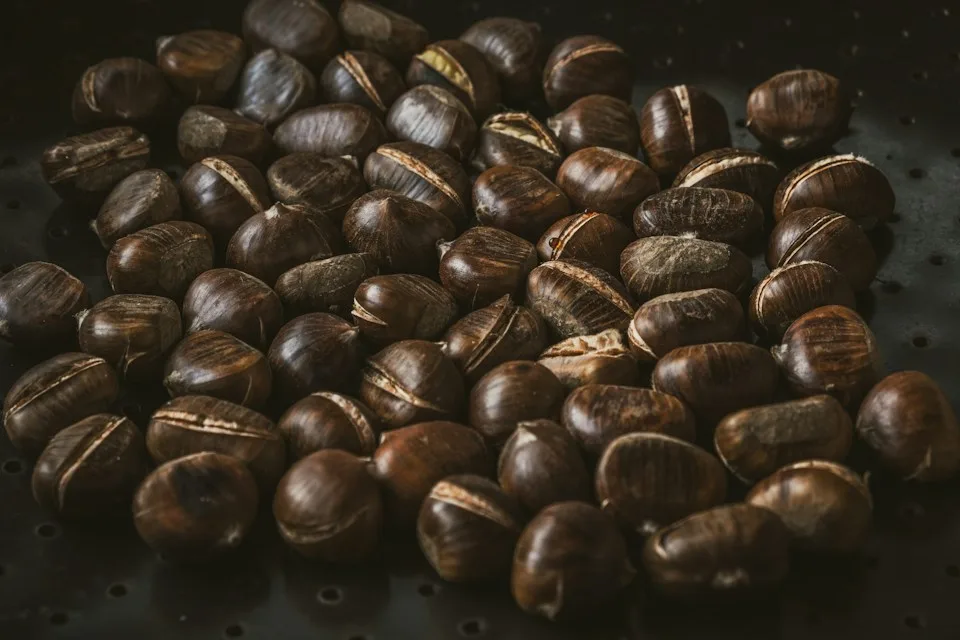
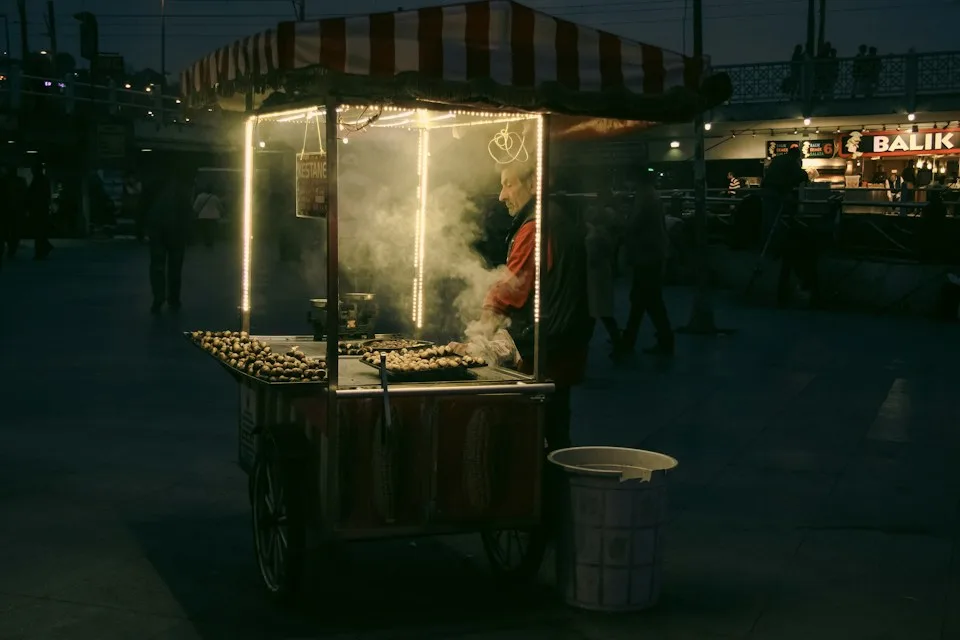
- Bruciate are roasted chestnuts. Local specialities also include tortelli, chestnut cake and marrons glacés.
- The Mugello tourism office records family variations in the cake and traces the region’s reliance on chestnut flour.
Inside this story 2 perspectives
Try the roast chestnut before the cake. The first tells you what the fruit itself tastes like, while the second shows what generations of cooks in the Tuscan Apennines have made of it. On Sunday 4 October the town of Marradi opens the 63rd edition of its chestnut exhibition market. The stalls spread through the historic centre, where the same local crop appears roasted, candied, folded into tortelli and baked in more than one kind of cake.
Bruciate is the word to look for if you want the roasted chestnuts. The regional tourism office also lists marrons glacés and castagnaccio alongside the local torta di marroni. Someone ordering the first cake they see could easily miss the fact that the two preparations have different names. A small group can turn that into an excuse to buy a few things to share and go back for the one that makes everyone curious.
The slice with a history underneath
The Mugello tourism office records a local recipe for torta di marroni that begins with cooked, puréed chestnuts. Milk, eggs and sugar go into the filling, along with flavourings that can include lemon zest, rum and alchermes. A thinly rolled pastry lines the baking pan. The filling goes inside it, giving a slice a quite different structure from a cake made by stirring a handful of chopped nuts through flour.
Even the decision about the liquid used to cook the chestnuts carries history. The local account describes households using water, milk or a mixture, and notes that richer families could afford to use milk. Recipes have passed through families with variations intact. That gives the visitor a better question to ask a stallholder than which version is correct. How is this particular cake made, and from whom did the cook learn it?
A crop before it was a festival
Chestnuts were fundamental to the diets of mountain farming families. The tourism office describes a sweet polenta made from chestnut flour that could take the place of foods made from wheat or maize when those crops were scarce. A fruit now celebrated in a market full of sweets once did much of the practical work of feeding a household. A fresh roast chestnut and a small piece of cake can tell both parts of that story in the same afternoon.
The market also hosts craft stalls, musicians and street performers, and the regional calendar lists further dates later in October. There is room to let the eating happen slowly. Start with the simplest form at one stall, wander the town and return to the chestnut in another guise. By the end of the walk a short list of ingredients can have supplied several quite different courses.