- Hiroshima’s morning memorial on 6 August marks the anniversary at 8.15am local time.
- Bereaved residents began floating handmade lanterns around 1947, according to the organisers.
- The evening event offers several ways to participate, including a volunteer-assisted launch and a virtual river.
Inside this story 2 perspectives
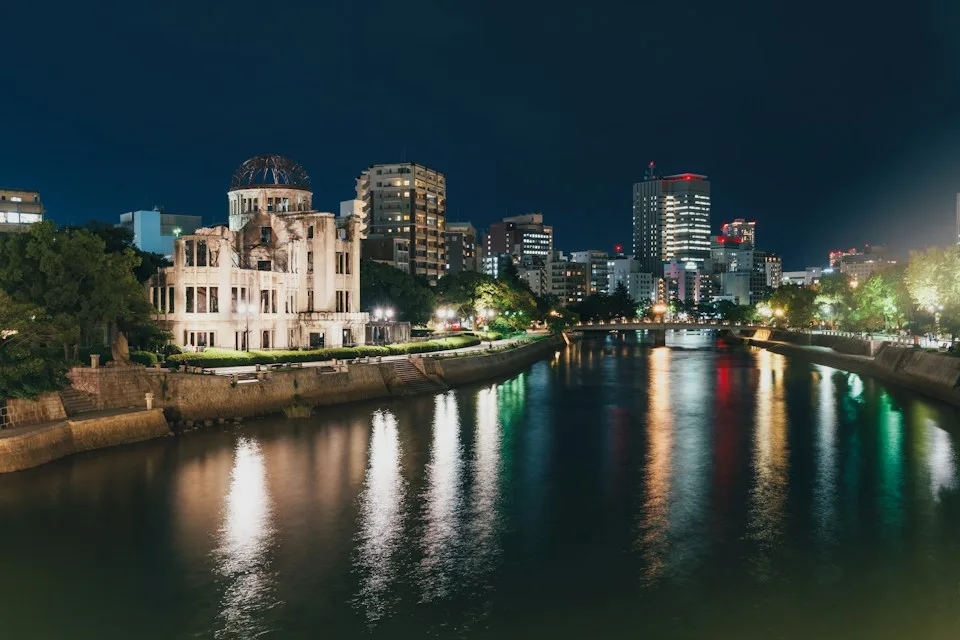
A coloured sheet of paper is one of the simplest ways to take part in Hiroshima’s remembrance on 6 August. A participant writes on it, makes it into a lantern and sends it onto the Motoyasu River near the Atomic Bomb Dome. Someone who cannot manage the launch can leave it to the organisers. The person who chooses the words still has the same place in the ceremony.
Hiroshima marked 81 years since the atomic bombing in 1945. Its official morning memorial is organised around a precise time. At 8.15am, the time the bomb fell, the city’s programme calls for silent prayer and the ringing of the Peace Bell. The register of victims, the dedication of flowers and the declaration of peace are part of the formal proceedings. In the evening, remembrance takes a different shape along the riverbank.
An observance begun by families
The lantern committee traces the tradition to around 1947. People mourning relatives and friends made lanterns by hand and floated them on the water. Residents associated with the city’s shopping districts and citizen volunteers have helped carry the observance forward. The organisers’ description identifies who did the early work and who keeps doing it today. Visitors arrive at a practice that already belongs to local families.
The evening allows for a private decision inside a public gathering. Each person chooses what to write. A message can carry someone’s name or a wish for peace. The committee’s instructions invite participants to buy lantern paper at reception, then assemble and float the lantern themselves or entrust that part to the organisers. For 2026, the reception price is ¥1,000 per lantern, available while supplies last. The launch is scheduled to begin at 6pm.
There are practical reasons to read those instructions before travelling to the river. The organisers accept home-made lanterns under material restrictions, keeping plastic and expanded polystyrene out of the water. A visitor who would like a record of a handwritten message should make one before releasing it. The committee makes clear that participants cannot retrieve a lantern once it is afloat.
Another way to attend
The city arranged an indoor broadcast of the morning ceremony as well as places at the park. The evening organisers also offer a virtual river for messages, some of which can be displayed in Hiroshima. These are different ways of joining an observance for people who may live far away or find access to the bank difficult.
At the morning memorial, the prefectural governor spoke of survivors who had only recently begun telling their stories. An anniversary can give people a date to gather around. The time someone needs before they can speak, and the few words they may finally choose to put on paper, belong to them.