- Researchers compared annual cave layers from India and China with Greenland ice-core evidence.
- Across eight ice-age transitions, the cave records indicated changes lasting more than a century, averaging about 180 years.
- Model results help explain why the Greenland signal can change before the wider ocean circulation completes its transition.
Inside this story 2 perspectives
A sharp turn in a line on a climate chart can give an ancient event a misleadingly precise duration. If the line comes from Greenland ice, it may record rapid change in the temperature or origin of the moisture that fell there. It need not register the entire time taken by a distant part of the climate system to change. A study published on 5 November uses records from Asian caves to examine exactly that difficulty.
During the last ice age, Greenland experienced sharp warmings known as Dansgaard–Oeschger events. Researchers have linked them to changes in the Atlantic meridional overturning circulation, the large-scale system that redistributes heat through the ocean. Changes in Greenland ice-core oxygen isotopes can take place over decades. Reading those changes as the timetable for the whole ocean circulation would give the latter a similarly rapid transition.
A second clock in the cave
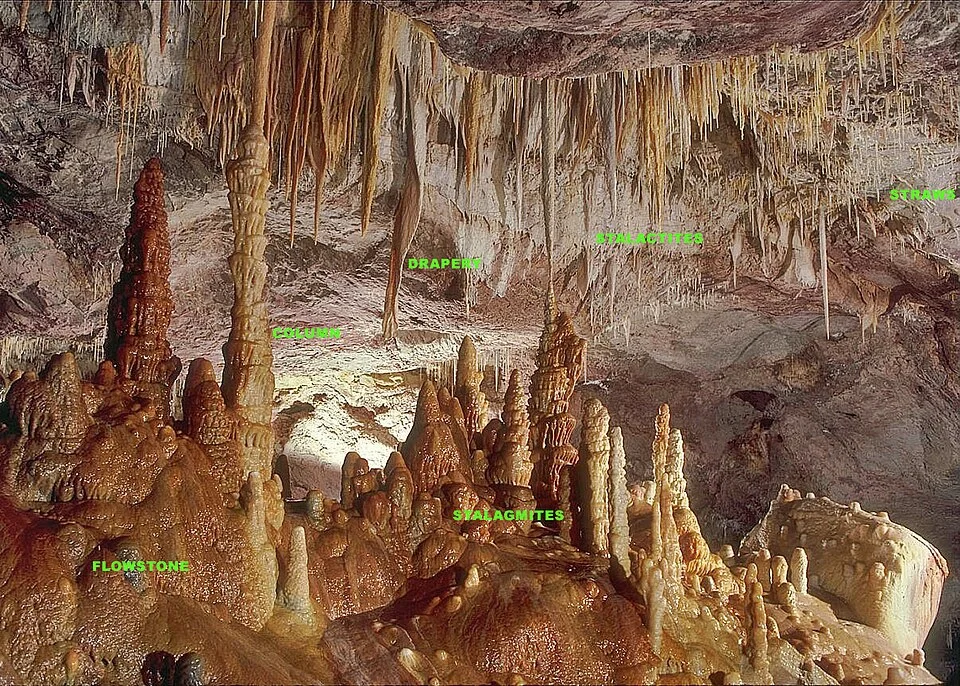
The researchers examined annually layered mineral deposits from Cherrapunji Cave in northeast India and Shuixi Cave in southwest China. They combined the new evidence with earlier records from Zhangjia Cave. Oxygen isotope variations in these deposits reflect aspects of the Asian monsoon that respond to changes in the Atlantic. The annual layers provided a way of constraining how long transitions took, a central difficulty when comparing ancient natural archives.
Across the eight events examined, the transitions indicated by the cave records lasted more than a century, with an average near 180 years. That result does not require the Greenland layers to be wrong. Each archive forms in a particular place and preserves the response of a particular process. The question is what part of the larger sequence it captures.
Why the records can disagree
The researchers used climate simulations to investigate how sea ice, ocean circulation and atmospheric moisture transport could change together. Their interpretation is that a relatively rapid reorganisation in the sources and routes of moisture can drive the sharp Greenland isotope signal. The Atlantic circulation can continue strengthening after that local signal shows much less additional change. The monsoon-linked cave records, in this interpretation, follow a longer part of the process.
These are indirect measurements of past circulation supported by modelling. The result does not set a timetable for a possible future change in the Atlantic under different conditions. Its contribution is more exact than that. For an ancient episode often described as abrupt, researchers now have an additional way to ask what changed abruptly, where the evidence was deposited and how long the linked process continued elsewhere. The cave and the ice can each be accurate clocks for different parts of the same story.