- The International Week of Deaf People runs from 21 to 27 September.
- The World Federation of the Deaf’s theme for Saturday is cultural rights under Article 30 of the disability rights convention.
- The convention recognises cultural and linguistic identity, including sign languages and Deaf culture.
Inside this story 2 perspectives
Imagine receiving an invitation to a play that promises an accessible performance but does not say which language will be used. Before deciding whether to book, a Deaf visitor may need to find out whether the show is performed in a sign language, whether interpretation is offered and where the interpreter can be seen. A promising adjective in an invitation does little work until those details are clear.
The World Federation of the Deaf has placed a closely related issue at the centre of Saturday’s programme for the International Week of Deaf People. Its theme for 26 September concerns Deaf culture as a human right. Article 30 of the United Nations Convention on the Rights of Persons with Disabilities addresses participation in cultural life and recognises the cultural and linguistic identity of people with disabilities, including sign languages and Deaf culture.
The information that comes before a ticket
For an organiser, the first practical step is to describe what has actually been arranged. A performance created in a national sign language, a spoken performance with an interpreter and a screening with captions are three different offers. A person’s preferred way of accessing one performance may differ from what they want for another. Naming the language and the format lets people decide for themselves.
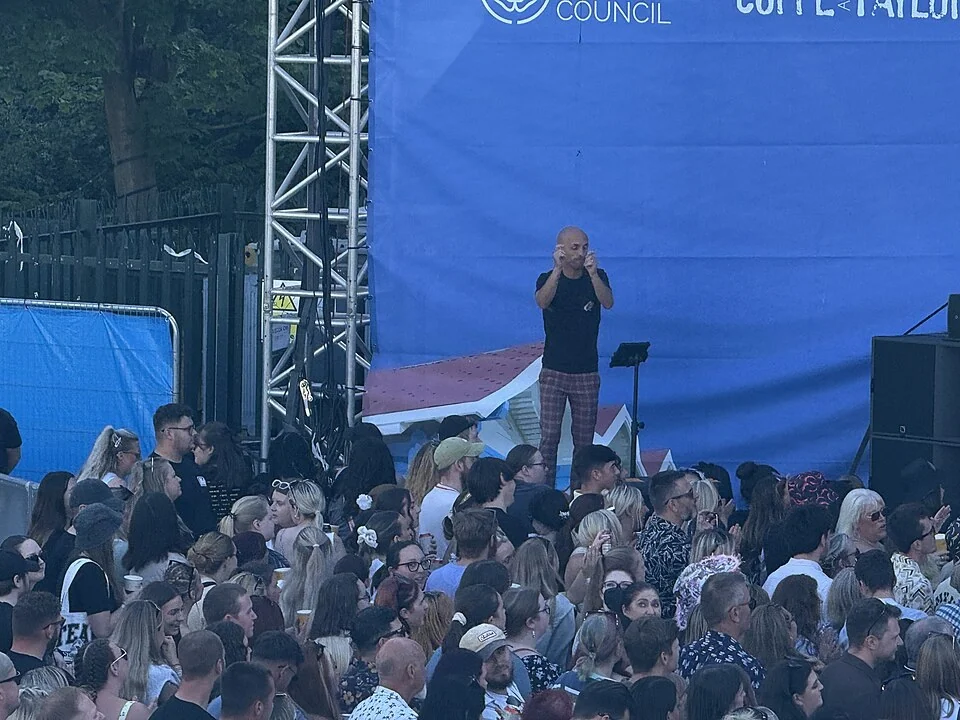
The physical arrangements then matter. Where can the stage action and any interpreter be seen together? If the auditorium is darkened, will the person signing remain clearly visible? When there is an audience discussion afterwards, how will questions and answers be shared? A contact route that does not depend solely on making a voice call can help prospective visitors resolve these points before they travel.
Who gets to create the programme
There is a further question beyond making an existing production accessible. Who gets to make the work being staged? A play conceived and performed by Deaf artists can use visual language as part of its original structure. A venue that only thinks about access once it has chosen every act on the programme may miss an entire body of creative work.
This is where the federation’s choice of a cultural-rights theme matters. Access to a seat and recognition of a language are related, but each requires different choices. A ticketing system, sightlines and interpretation address practical routes into an event. Commissioning artists, scheduling their work and listening to audiences shape which events come into existence.
For a small venue without the resources to do everything at once, a clear invitation is a concrete place to start. Describe the performance accurately, give the audience a usable way to ask questions and involve people who work in the language. The audience should know what kind of evening it is being invited to share.