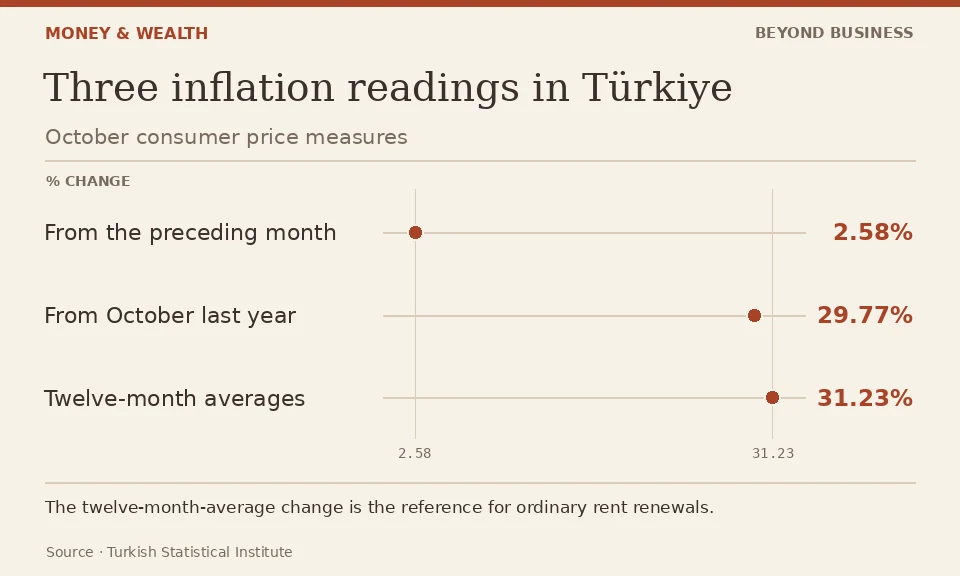
- Türkiye’s October consumer prices rose 2.58% in a month and 29.77% in a year.
- The 12-month-average change used for ordinary rent renewal calculations was 31.23%.
- The ceiling is different from an agreed lower increase or a new market rent.
Inside this story 2 perspectives
On 3 November, renters in Türkiye saw at least three percentages emerge from the same set of October price statistics. Consumer prices rose 2.58% from the month before. Compared with October a year earlier, they rose 29.77%. A third measure, the change calculated using 12-month averages, was 31.23%. For someone checking an ordinary Turkish-lira lease renewal this November, that third line is the one to find.
Article 344 of the Turkish Code of Obligations links the validity of agreed increases for renewed rental periods to the change in the consumer price index calculated on 12-month averages. On the November figures, that gives a 31.23% ceiling in the ordinary case. The distinction matters for a household trying to budget for the next rental period, because choosing a different line from the statistics table produces a different monthly payment.
Consider a current monthly rent of 20,000 lira. At the full 31.23%, the increase would be 6,246 lira, making the revised rent 26,246 lira. An increase equal to the 29.77% headline annual inflation rate would instead produce 25,954 lira. That is a difference of 292 lira each month. Both calculations are mathematically straightforward. The choice of the legal reference produces the difference.
Why two annual percentages differ
The October-to-October rate compares the price index at two points. The change based on 12-month averages compares the average level of the index over a year with the average over the preceding year. Including many monthly observations gives earlier price movements a continuing place in the calculation. A household can therefore see the current annual inflation rate below the figure used at renewal.
A ceiling also leaves space for a lower increase. For a household checking a proposed figure, the relevant starting point is the current applicable rent. The next questions concern the renewal month and the terms governing the calculation. An asking price for a newly advertised flat in the same street answers a different question about the market.
Where the example ends
The code treats certain situations separately. For leases longer than five years or renewed after five years, Article 344 allows a court determining rent to consider the property’s condition and comparable rents alongside the index and fairness. Contracts expressed in foreign currency also have separate provisions. Those cases need the actual contract and its history before anyone can sensibly apply a number.
For a routine annual renewal, the useful record is short. Keep the previous rent, the date of renewal and the specific index line used in the calculation together. Someone looking at that note months later will then know exactly why November’s 31.23% was chosen among three figures published on the same morning.