- The international observatory said it could not accept the financing proposal for La Palma.
- It said it would continue to pursue its primary site in Hawaiʻi.
- The telescope’s planned primary mirror uses 492 separate hexagonal segments.
Inside this story 2 perspectives
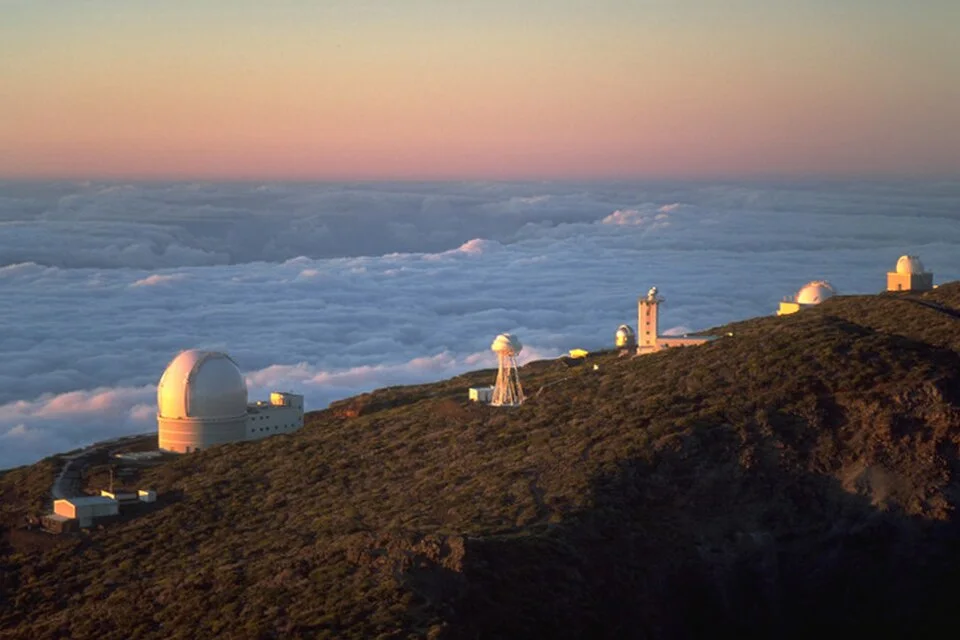
An observatory can specify the shape of its primary mirror to extraordinary precision and still be unable to say where it will stand. On 29 September, the organisation behind the Thirty Meter Telescope explained why its international partners were no longer pursuing the Roque de los Muchachos site on La Palma. They had considered Spain’s financing proposal and could not accept it. The statement followed a letter sent to Spain’s science minister on 18 September.
In its explanation, the observatory praised the scientific standing of both the site and the Instituto de Astrofísica de Canarias. It said it would continue to pursue its primary site in Hawaiʻi. That wording describes the organisation’s direction of travel. It gives neither a construction start nor an assurance that a particular site will ultimately host the telescope.
What the engineers already know
The planned telescope takes its name from the diameter of its primary mirror. Building and transporting one piece of glass 30 metres across would be a very different engineering proposition from the design that TMT has adopted. Instead, 492 hexagonal segments, each about 1.44 metres across from corner to corner, would form the mirror. Their positions must be controlled so that the assembly acts as a single optical surface.
For the observer, the point of the large collecting area is to catch light from faint objects. For the people responsible for building the instrument, the same ambition produces a set of recurring tasks. Make enough segments to specification, mount them accurately, keep them aligned as the telescope moves and maintain the system over its working life. Choosing a mountain with excellent observing conditions addresses only part of that job.
A decision measured in decades
The observatory drew attention to a 50-year lifespan and the difficulty of arranging finance among multiple countries. Those circumstances make the headline size of any one offer a poor guide to whether it can work. A partner considering a long commitment has to think about the cost of getting the instrument into operation and the resources available to keep using it. The public statement does not identify an individual term or a partner as the cause of the outcome.
La Palma’s institute reproduced the explanation, giving readers on the island access to the international organisation’s account. One detail in that account deserves to survive the inevitable shorthand about a rejected location. The partners described a financing decision and continued to acknowledge the qualities of Roque de los Muchachos. The design for a mirror of 492 pieces remains a concrete achievement on paper and in engineering work. The agreement that would let it become a working instrument in one place is a different achievement, still to come.