- Somerset House scheduled three Saturday performances of Flowing Upstream during the 1-54 art fair.
- The installation brings discarded Ankos costumes together with sound, light, moving image and live performance.
- A new Modernist focus and a six-artist Gallery 1957 presentation give the fair further ways to approach cultural inheritance.
Inside this story 2 perspectives
Arrive between performances and there is no installation to see. That detail in the Somerset House programme changes how a visitor approaches the courtyard during London’s 1-54 Contemporary African Art Fair. Flowing Upstream is scheduled for approximately 36 minutes at a time, with sessions at noon, 3pm and 6pm on Saturday 17 October. An encounter with discarded masquerade costumes becomes an appointment.
The work is by Martin Wöllenstein, developed with Romeo Addai-Boateng Akoto of Ghana’s Supreme Masqueraders Society and Perve Galeria. It combines discarded Ankos costumes with sound, moving image, light and live action. Fifty-four chalk circles represent the countries of the African continent. The venue describes an examination of the movement of materials and cultural practices between Africa and Europe.
A costume after its first performance
A costume has a relationship to a moving body that an ordinary piece of fabric does not. It can also carry the memory of people who made, wore and watched it. Once an object is discarded, the people who handle it next may see a resource, an unwanted textile or a record of an occasion. With a masquerade practitioner credited in the work’s development, the performance brings a particular tradition into an installation concerned with that change in value.
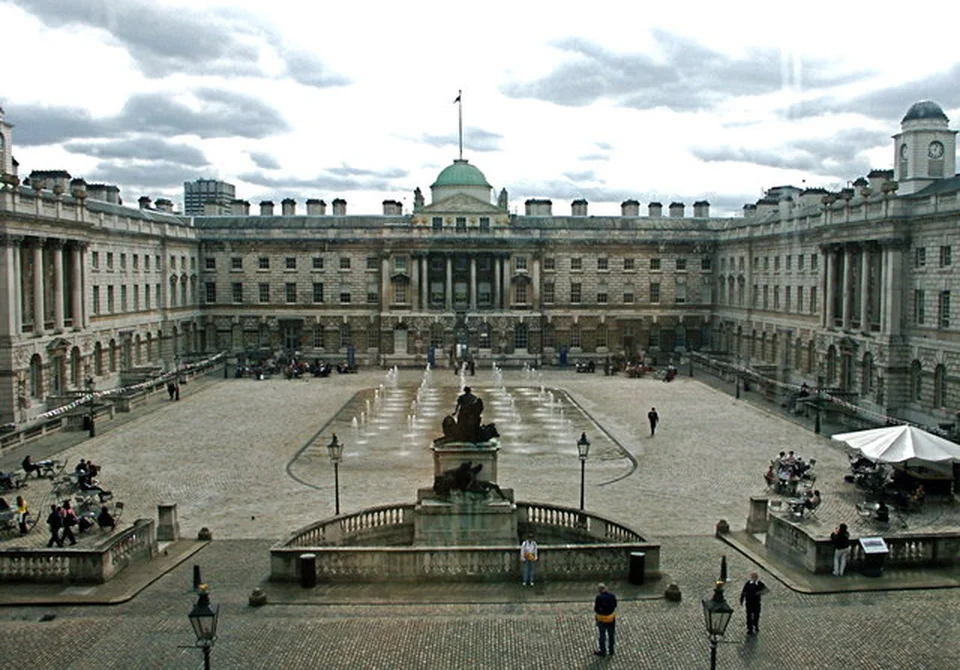
The location adds another part of the argument. The Edmond J. Safra Fountain Court gives a temporary arrangement of chalk and reclaimed materials a formal architectural setting. The schedule asks a visitor to attend to how it changes in real time. A photograph might record where a costume lies or stands. It cannot give the visitor the timing of the sound or the length of an action unfolding across the space.
A second look inside the fair
The wider fair provides other ways of looking at cultural inheritance. Gallery 1957 has brought six artists to booth W19, including Rita Mawuena Benissan, Larry Amponsah and Yaw Owusu. Its presentation brings painting, collage, embroidery and sculptural assemblage into conversation through materials ranging from archival imagery to currency. These works need not make the same argument as the courtyard installation for a visitor to notice a related question: who gives a material its value after it has served an earlier purpose?
The fair’s 14th London edition also introduces a spotlight on Modernist artists from Africa and its diaspora, including West Wind, curated by Nancy Dantas. A visitor can move between these different time scales over a single afternoon, from art historical reassessment to contemporary objects to an action lasting little more than half an hour. For the courtyard, the practical detail remains the one that matters first. The final scheduled Sunday performance is at 2pm.