- South Africa’s radiology society marked the 15th International Day of Radiology.
- The comparison section identifies prior images used in a report.
- The referring clinician can interpret the impression in light of symptoms and medical history.
Inside this story 2 perspectives
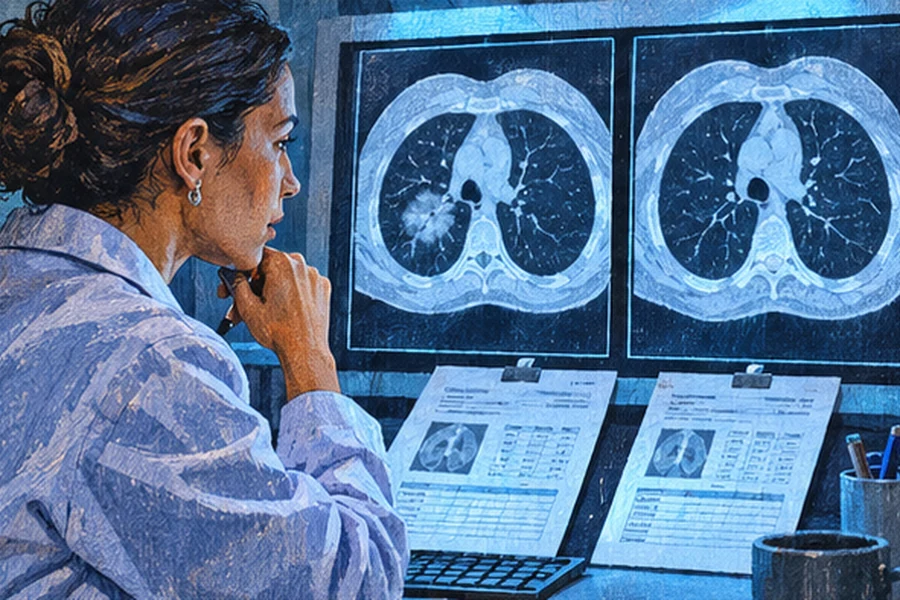
A scan report can arrive in a patient portal before the person who ordered the examination has had a chance to discuss it. A reader looking for the answer may head straight for the last paragraph. There is another line worth understanding first. The comparison section tells the reader whether the radiologist had an earlier examination available and, often, when it was made.
South Africa's radiology society marked 8 November as the fifteenth International Day of Radiology. The day recognises the role of imaging professionals in patient care. One part of that work is relatively invisible. A radiologist has to describe what an image shows, identify the question that sent a patient to the scanner and communicate an interpretation to the clinician looking after that person. Older images can supply information a single examination cannot.
The date that gives an image a past
Think about the ordinary difficulty of looking at a single photograph of a room and being asked what has changed. A dated photograph of the same room helps answer a different question. Medical imaging is much more specialised, but the reason for identifying a comparison is recognisable. The report can specify the earlier examination against which a particular observation was assessed. Without such an examination, the radiologist has a different set of information.
RadiologyInfo, the patient information resource from professional radiology bodies, suggests arranging for previous images from another facility to be available when relevant. How that works depends on the facilities involved. Identifying where an earlier examination took place can be a constructive starting point for a conversation with the team. A printed summary and the actual images are separate things, and a practice can explain what it needs.
What the last paragraph can do
The findings section records what the radiologist observed. The impression brings together the most important points for the question at hand and may include a recommendation. A person reading an unfamiliar term there has good reason to want it explained. The clinician who ordered the examination can put the report alongside symptoms, previous results and the reason for requesting the scan.
A useful set of questions follows from those roles. What question was this examination intended to answer? Which earlier study could the radiologist see? Has the result changed what happens next, and who will communicate that step? These questions work even for a patient who would struggle to explain the technology used to make the image.
Much of the attention on a day devoted to radiology naturally goes to the machine and what it can reveal. A patient may remember a smaller moment more clearly, when someone opens the report, points to a date and explains why a comparison from two years ago changes how the team reads today's image.