- Pretoria’s national quality conference is scheduled for 12 and 13 November.
- A process map can expose a problem where work passes between people.
- Check whether a fix reduces rework or transfers it to someone else.
Inside this story 2 perspectives
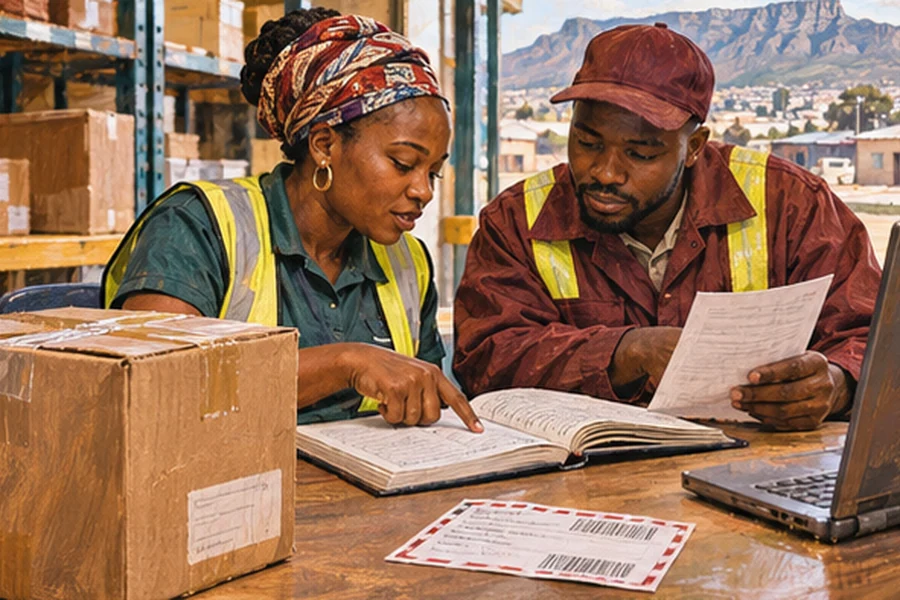
A parcel can leave the packing bench in perfect condition and still turn up at the wrong address. In that case, telling the packer to take more care may only make a good parcel take longer to pack. The place to investigate is the moment at which an address moved from the customer’s order onto the shipping label. It is a surprisingly practical question to bring to a week devoted to quality at work.
Ahead of its 12 and 13 November conference in Pretoria, the South African Quality Institute has put process design at the centre of its National Quality Week programme. Its partner is the Council for Scientific and Industrial Research. For a person who runs a small team and can spare half an hour, there is a version of that conversation worth having at the next desk. Choose a job that regularly comes back for correction and follow one real example all the way through.
Ask the person who receives the work
The American Society for Quality describes process mapping as a way of making the steps in a piece of work visible. Start with the event that prompts somebody to act. End with what the customer or next colleague actually receives. Ask the people involved to describe what happened to the same order, invoice or request. It is easy for two people to describe entirely sensible routines that fit together badly at the join.
The person who creates a shipping label, for example, might copy the first address visible on a form. The person who designed the form may have intended that box for billing and left a separate delivery address further down. Until someone follows a real parcel, the packing team and the finance team can each believe the other already checks that detail. A designed change might be as small as showing the delivery field by default on the label screen.
What would the next five cases tell you?
One corrected order does not establish that the process has improved. Try the revised arrangement on a small sample where it is appropriate and reversible. Count how often the receiver can use what they are given without asking the sender for information. If corrections fall, check whether the work has simply moved somewhere else. A packing team can save five minutes per order by creating ten minutes of work for customer service.
The point applies beyond parcels. A brief that leaves a designer unsure who approves the final image and a repair request that reaches a technician without a location have something in common. A colleague understands the assignment only after making an extra call. Following one of those calls back to its origin gives a team a concrete place to begin. That is a manageable thing to bring home from Quality Week, even for someone who never sets foot in the conference hall.