- A conventional electron microscope can damage sensitive samples if the exposure is too high.
- The proposal couples passing electrons to ions held in place, allowing information to build across interactions.
- The Austrian team announced implementation work in Vienna; it has yet to report images from the completed device.
Inside this story 2 perspectives
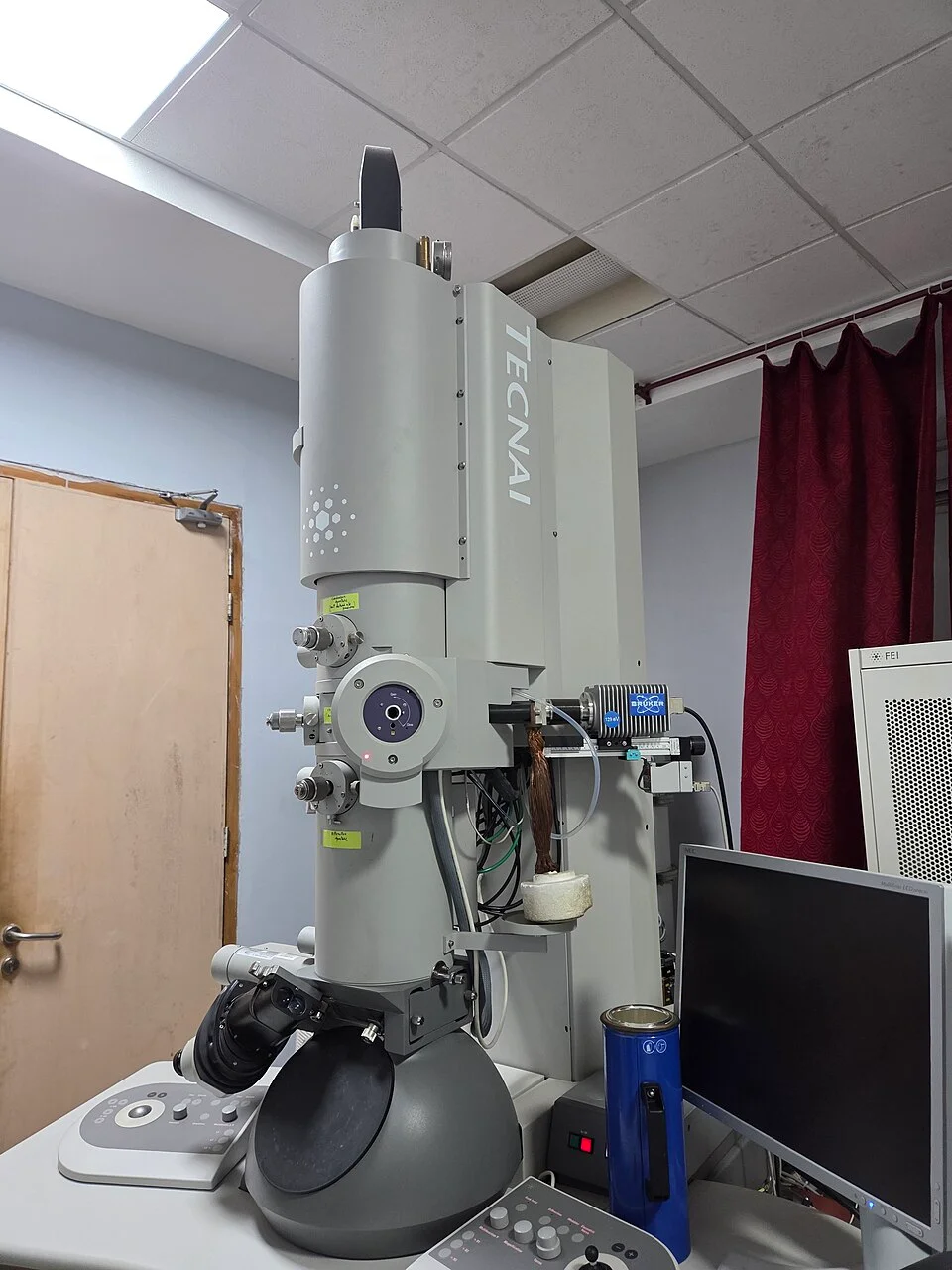
Scientists who study a delicate specimen with an electron microscope face an awkward limit. More electrons can carry more information about its fine structure, yet the beam itself can damage the material. An Austrian collaboration is approaching the problem from the detector end. What if the microscope could keep and combine information that conventional electron counting leaves behind?
On 18 August researchers in Vienna described plans to couple an electron microscope to a small quantum processor made from trapped ions. Teams from TU Wien, the University of Vienna, Johannes Kepler University Linz and the University of Innsbruck contributed to the proposal. Their analysis establishes a possible advantage on paper. The instrument intended to test it is being developed at TU Wien.
What one electron can leave behind
An ion is an atom or molecule that carries an electric charge. The proposal uses ions held in place near the path of passing electrons. The charged particles can interact even without the electron being absorbed by a detector at that point. The researchers calculate that the effect of a single electron could produce a detectable change in the quantum state used to store information.
The important part is what happens across a succession of electrons. An ordinary count records that an electron arrived at a particular detector. The proposed device would keep a controlled relationship between the passing electron and the trapped ions, allowing information from more than one interaction to accumulate. The ion system acts as a physical memory inside the measurement. It is a different proposition from taking a conventional micrograph and asking a fast computer to sharpen it afterwards.
Which samples would gain?
For a material that tolerates a strong beam, sending through additional electrons may already produce a useful picture. The incentive to handle each electron more carefully is greater where the specimen changes or degrades under exposure. The researchers cite individual proteins as an example of the sort of sensitive material that motivates the work. The proposal does not present a gallery of protein images obtained with the new instrument.
The challenge is to connect two demanding pieces of equipment closely enough that the predicted interaction can be measured reliably. Theoretical calculations can estimate the signal under stated conditions. An experimental team must show what remains when actual beams, trapped ions and detectors work together over time.
That makes the test to watch quite specific. An image that simply looks sharper would leave room for many explanations. A comparison at a known electron exposure, on otherwise comparable samples, could show whether the measurement actually extracts more useful information before damage becomes limiting. For people who need to see a specimen that cannot be replaced, conserving that information would be the real prize.