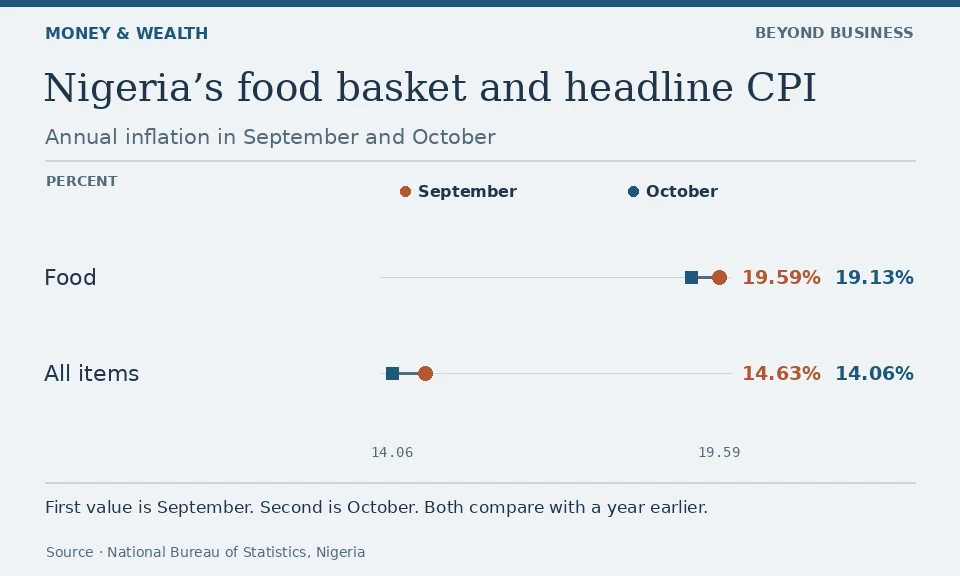
- Food prices fell 0.75% from September but were 19.13% higher than a year earlier.
- Headline inflation eased to 14.06% year on year, while the overall price level rose during October.
- Households can compare the cost of a fixed shopping list with the amount they spend after substitutions.
Inside this story 2 perspectives
For a Nigerian family trying to agree how much to set aside for groceries, October offers two perfectly reasonable answers to the question “Are things getting cheaper?” Compared with September, the average food basket cost a little less. Compared with the same month last year, it cost almost a fifth more. The answer depends on when the family last set its budget.
Figures released on 16 November by Nigeria’s National Bureau of Statistics put annual food inflation at 19.13%, down from 19.59% in September. Food prices also fell 0.75% over the month, their second consecutive monthly decline. Meanwhile, annual inflation across all items eased to 14.06% from 14.63%. The overall index still climbed 0.43% between September and October, up from 0.06% the previous month.
Two shopping trips, two comparisons
Imagine a basket that cost ₦100,000 in October last year. If its price tracked the national food index exactly, the same contents would cost ₦119,130 this October. Now start with a different basket worth ₦100,000 in September this year. Moving it forward by one month at the reported food rate brings the cost to ₦99,250. Those sums illustrate two different starting points. Neither is a quote for groceries in a particular market.
That difference matters when a relative abroad has been sending the same amount towards food for a year. A small saving on last month’s trip can help pay for another item this month. It does little to close the gap between today’s prices and the older budget. There is a second calculation for the sender: the amount in naira that arrives after conversion and transfer charges. Even a fixed transfer in pounds or rand can buy different amounts of food from one trip to the next.
What goes in the basket?
Nigeria’s rebased price index uses expenditure weights from 2023 and a 2024 price base. Its 934 product varieties cover far more than food. A household paying rent, transport and school costs alongside groceries allocates its money differently from a national average. A family buying most of its food and one growing some of its staples can experience the same month quite differently.
One way to see that difference is to put two shopping lists side by side. The first prices the same quantities of the same staples bought a month ago. The second is what actually went into the bag this time. If the total is lower because the family bought less fish or a smaller pack of rice, a cheaper receipt can disguise how much the budget has tightened. If the same quantities really did cost less, that is the month’s relief in a form everyone at the table can recognise.