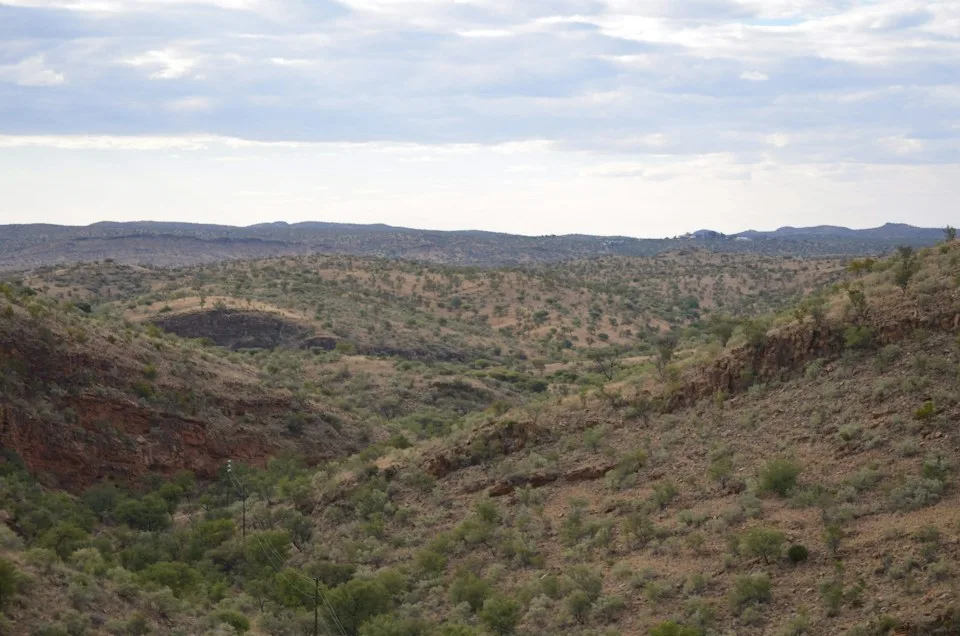
- The 1966 confrontation took place at Omugulugwombashe in northern Namibia.
- Heroes’ Acre near Windhoek was inaugurated on 26 August 2002.
- The 2026 commemoration marks 60 years since the 1966 event.
Inside this story 2 perspectives
At Heroes’ Acre near Windhoek, the date 26 August points in two directions. It marks the 1966 confrontation at Omugulugwombashe associated with Namibia’s armed liberation struggle. It is also the day in 2002 on which founding president Sam Nujoma inaugurated the memorial near the capital. The presidency’s 60th Heroes Day commemoration at Heroes’ Acre this year brings that distinction into focus for anyone trying to understand the place they are visiting.
The battle site is in northern Namibia. The memorial near Windhoek is the much later work of a country choosing how to remember its history. To stand at Heroes’ Acre is to encounter a national act of remembrance. A traveller would have to make a separate journey to stand at the site of the events of 1966.
Read the landscape as well as the statue
The City of Windhoek describes a site set between two hills, its principal features arranged on a slope. Among them are an eternal flame, a curved relief depicting the struggle and an eight-metre sculpture of the Unknown Soldier. A pavilion and gateway help organise the visitor’s route. The scale of the sculpture makes it an obvious focus. The relief offers a different experience, encouraging a visitor to move across a sequence rather than stopping at a single figure.
The anonymous soldier has a particular role in a national memorial. An individual portrait invites a reader to ask for a name and a life story. An unnamed figure allows many people to see someone who might never be commemorated with an individual statue. Both forms of remembrance have limits. An account of one life can give specificity to a national story, while a national monument can draw connections that one biography alone would leave out.
There is another layer in the construction itself. According to the city, North Korean specialists worked with Namibian institutions, including the city, cultural and public works authorities and the National Monuments Council. The 2002 Government Gazette formally declared the site a national monument. These records identify it as a designed, officially recognised memorial whose construction is itself part of Namibia’s post-independence history.
Two sites, two kinds of visit
At Omugulugwombashe, a separate memorial was unveiled in 2004. Contemporary reporting in The Namibian names veterans and relatives who attended that occasion and records accounts of the 1966 encounter. Such material gives visitors an opportunity to connect a date they have seen on a calendar with people who lived through its aftermath.
A commemorative day can change access arrangements, so a traveller intending to visit should check current local guidance rather than infer opening times from the national holiday. More important is the question to carry into either place. Is this where an event occurred, or where later generations decided to tell its story? In Namibia on 26 August, both answers matter.