- Mänk’áčen (Revision 6) was presented at Mumbai’s National Centre for the Performing Arts.
- The project combines archival photographs, documents and installations.
- Valenzuela-Escobedo describes working with a Lafkenche Mapuche community in Chile without bringing a camera.
Inside this story 2 perspectives
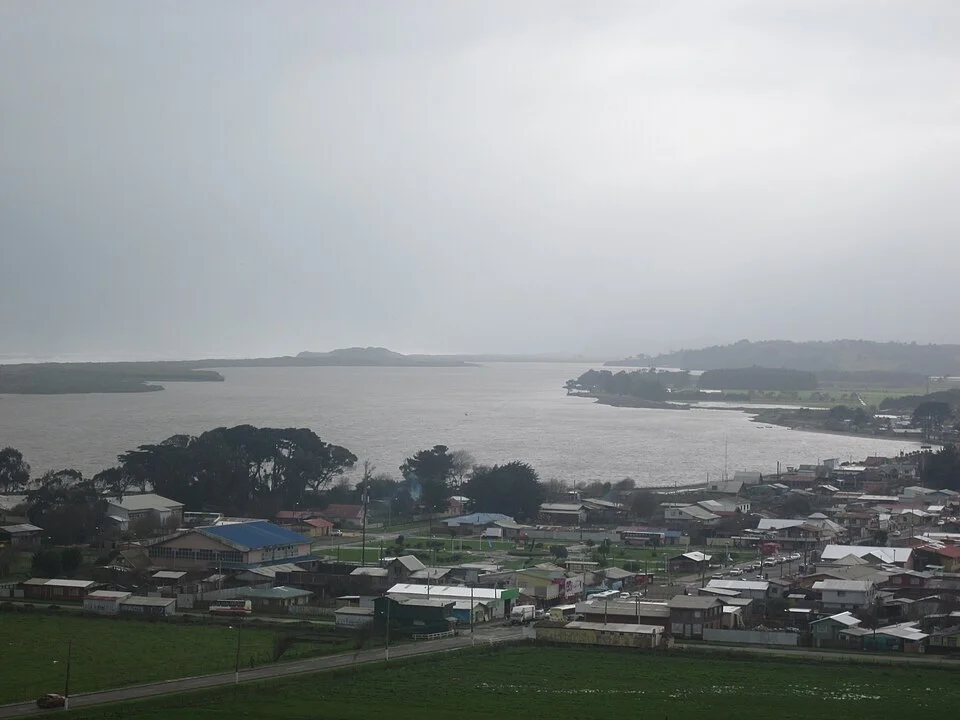
In 2017, when Sergio Valenzuela-Escobedo began working with a Lafkenche Mapuche community in Puerto Saavedra, Chile, he deliberately went without a camera. It was an unusual decision for an artist trying to understand the history of photography. It also gave him a chance to learn what people knew about seeing and being seen before introducing the object whose history he had come to study.
That decision lies behind Mänk’áčen (Revision 6), presented this September at the National Centre for the Performing Arts in Mumbai. In the Dilip Piramal Art Gallery the Chilean artist and researcher brings the camera’s arrival in South America into a conversation with its history in India. Photographs appear alongside field notes, archival material and installations. A visitor is asked to consider what happened around the making of an image and what later happened to the record.
A caption names some people and describes others
One example discussed in coverage of the exhibition is a glass-plate negative from the Cape Horn Scientific Mission of 1882–83. Its published credit names photographers Jean-Louis Doze and Edmond Joseph Augustin Payen. The three women pictured are identified collectively in the caption by region and face paint. On a single line, people on one side of the camera have names and those on the other are presented as a group.
An archive can preserve a fragile negative remarkably well while passing on that imbalance to each new reader. Digitising the image may give many more people access to it, but it also circulates the words under which the picture was catalogued. In an interview with the British Journal of Photography, Valenzuela-Escobedo describes drawing on publicly accessible digital museum records and placing their contents beside objects and images that originally occupied different categories.
What travels with the equipment
The artist also examines a familiar story that Indigenous people feared a camera could take a person’s soul. He points to nineteenth-century European writers who voiced anxieties of their own about what the device could capture. The question becomes who had the power to attribute a belief to somebody else and have that account travel with the photograph. A striking anecdote attached to an image could do a great deal of work for an explorer returning home.
The exhibition title includes a revision number, appropriate for research that changes with each collaboration. Mumbai brings another set of encounters and institutions into the project. The decision in Chile to leave the camera behind consequently seems less like an absence. It gave a community room to contribute knowledge that a photograph taken on the first day could never have been expected to contain.