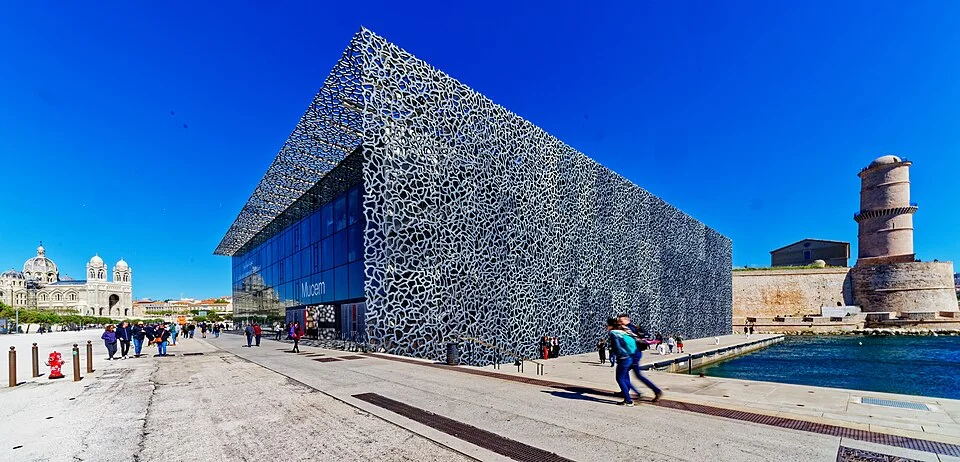
- Mucem’s European Heritage Days programme runs on 19 and 20 September.
- Its Conservation and Resource Centre offers tours of stores normally closed to the public, with registration on site subject to space.
- A separate children’s workshop uses photographs and objects to explore the making of an image.
Inside this story 2 perspectives
A museum exhibition offers visitors a carefully edited answer to a question. Someone has decided which objects belong together, which information deserves a label and how much a person can take in during one visit. In Marseille this weekend, Mucem is giving the public a look at what has to exist before those editorial choices can be made.
For European Heritage Days on 19 and 20 September, the museum’s Conservation and Resource Centre is offering tours of collection stores normally closed to the public. The weekend programme also includes workshops on museum careers and a children’s introduction to photography. Access to the store tours requires on-site registration and is subject to availability, a separate arrangement from the free admission to the museum’s exhibitions.
What the stores can explain
An object off display is easy to think of as an object waiting for its turn. It may have several other uses. Researchers need to know where it is, how it entered the collection and what evidence accompanies it. Someone planning a loan or considering an exhibition needs to understand its condition and how it can be moved. An item whose origins are uncertain may require years of investigation before a responsible label can be written.
These questions become particularly vivid with photographs, one theme of this year’s heritage days. A photographic print can be appreciated as an image and studied as a physical object. The order of images in an album can carry information that disappears when one picture is reproduced on a wall. Notes or other contextual evidence can alter what a viewer thinks they know about the person or place shown.
Make the image before discussing the archive
Mucem’s workshop for children aged six to twelve begins with a presentation of photo albums and moves into a miniature studio. Participants can select a paper background and objects to photograph, and experiment with the lighting. It is an accessible way to observe a curatorial problem from the opposite direction. Before a museum worker has to decide how to interpret an image, someone has already made choices about what the image will show.
A family able to take both routes through the programme might begin with a simple question. If someone encountered the finished photograph fifty years later, which of the maker’s decisions would still be obvious? A background can be visible without the viewer knowing why it was chosen. An absent object leaves no direct evidence that the photographer considered putting it in the frame.
The collection store and the miniature studio give different answers to the same question. Making an image requires choices. Preserving enough of those choices for a future audience to understand them is a substantial part of a museum’s work.