- Scientists studied ancient mineral inclusions from a meteorite recovered in Antarctica.
- They inferred that a magnetic field was present in the solar system’s first roughly 200,000 years.
- The measurements constrain an explanation for the young disk’s behaviour but do not recreate its entire history.
Inside this story 2 perspectives
If you wanted to measure a magnetic field that existed more than 4.5 billion years ago, where would you put the instrument? One answer is a laboratory on Earth. Some minerals can retain evidence of the magnetic environment in which they formed. The difficult part is finding a sample from the right time whose record has survived everything that happened to it afterwards.
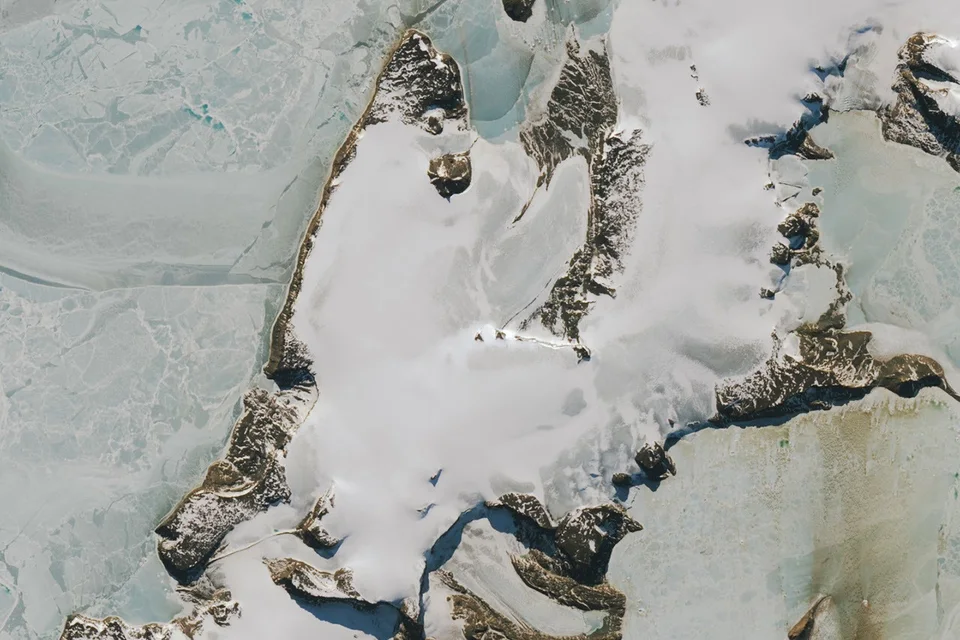
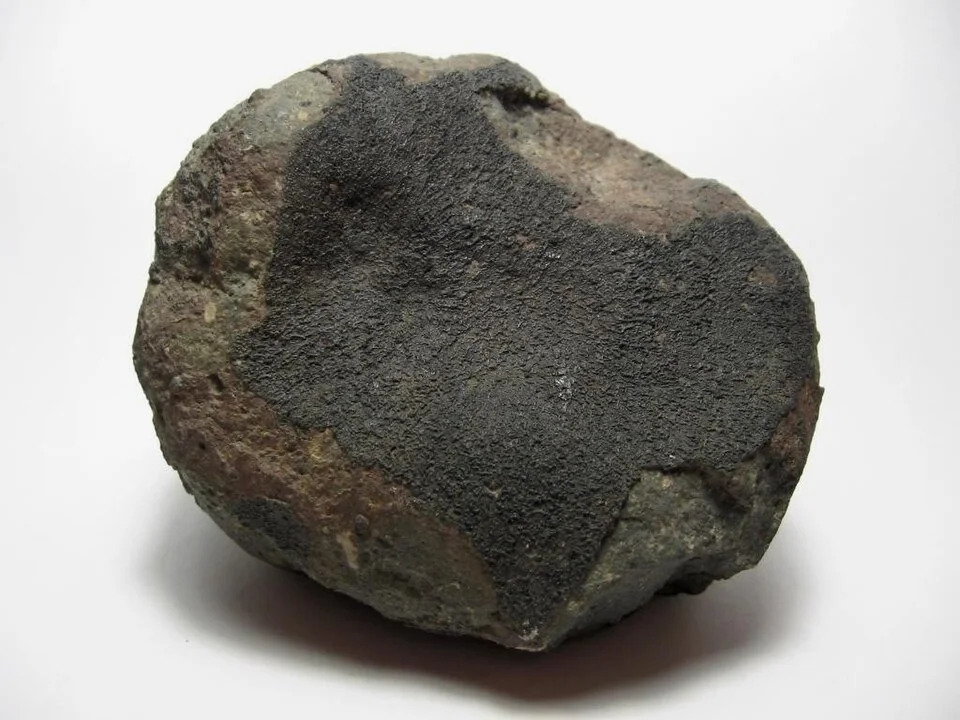
On 24 August researchers reported measurements from grains in DOM 08006, a meteorite recovered in 2008 in Antarctica’s Dominion Range. It contains calcium- and aluminium-rich inclusions, among the earliest solid materials known from the solar system. The team inferred that a magnetic field existed during roughly the first 200,000 years of that system’s history, a window in which matter was gathering into the disk associated with the formation of our Sun and planets.
Why this particular rock?
A meteorite that reaches the ground has already travelled through a succession of environments. Heat, water or collisions during that history can change its minerals and make an ancient magnetic signal difficult to assign to a particular time. Researchers valued DOM 08006 because it had undergone unusually little alteration. That made it a promising place to look for material that retained the character of its earliest environment.
The team isolated small inclusions containing magnetic minerals and measured the magnetisation they still carried. One instrument used for the work is sensitive enough to detect very weak signals in tiny samples. From the measurements the researchers inferred an early field of roughly 150 to 600 microteslas. MIT compared that range with around three to twelve times the strength of Earth’s magnetic field today. The comparison gives a familiar scale to an estimate about a very different setting.
How magnetism changes the question
Gravity can draw material towards a growing star. In a rotating cloud or disk, however, matter must also be able to give up or redistribute some of its angular momentum as it moves inward. A magnetic field acting on charged material offers a physical way for that redistribution to happen. The timing therefore matters. A field that appeared only after planets began to assemble could not have performed quite the same role in the earliest disk.
The study gives researchers evidence for a field early enough to enter that discussion. It does not establish its exact strength everywhere in the disk, or which part of the Sun’s eventual mass took a particular route. More well-preserved samples would offer additional points against which to test competing models. For now, a few grains that arrived on Antarctic ice have given an astronomical argument something it rarely gets: a small piece of the era under debate that can actually be brought beneath a microscope.