- The last day of Meiji Jingu’s autumn grand festival falls on 3 November.
- The principal rite is scheduled for ten, with other offerings in different parts of the grounds.
- Allow additional walking time beyond the station-to-entrance journey.
Inside this story 2 perspectives
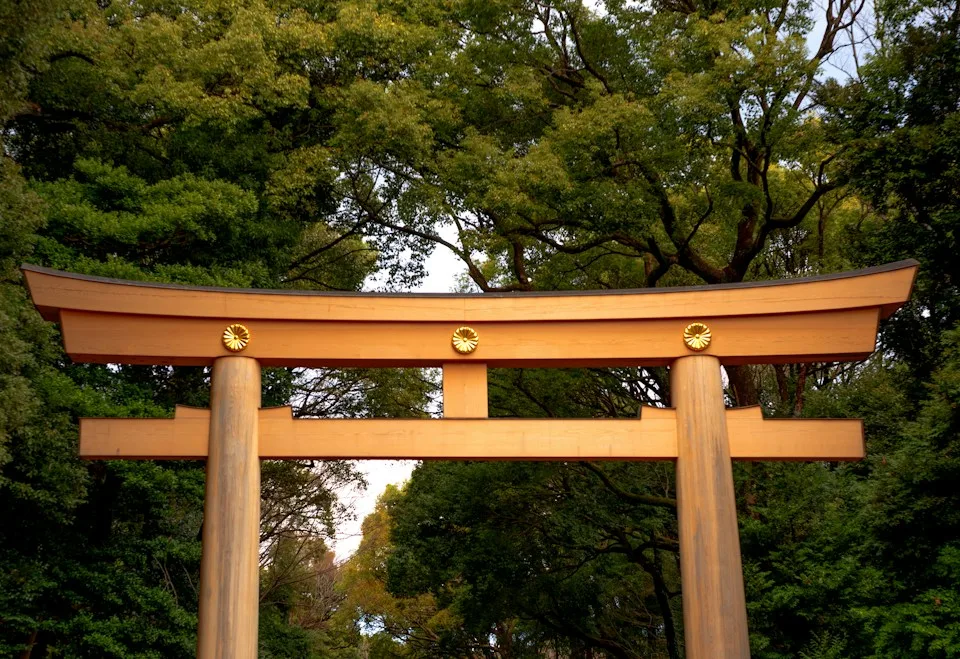
A journey planner can take a visitor accurately from a Tokyo railway station to the entrance of Meiji Jingu and still leave them late for the event they came to see. The shrine itself asks people to allow at least another ten minutes from the entrance to its main buildings. On 3 November, when several events take place in different parts of the precinct, the distinction is worth remembering.
The date is Japan’s Culture Day and the anniversary of Emperor Meiji’s birth. It is also the last day of the shrine's autumn grand festival. The celebrations run from 1 to 3 November, beginning with the anniversary of the shrine’s enshrinement. The official programme places the principal rite on the final morning at ten, with an imperial envoy sent from the palace.
There is no single place from which to see every part of the programme. Some observances take place at the sanctuary. Other offerings use the lawns and spaces around the approaches. Even the same hour can mean different things in different parts of the grounds. Reading the venue in the shrine timetable is as important as finding the entry in the right day’s column.
A morning and an afternoon
For someone choosing how to spend the public holiday, the day offers two quite different rhythms. The principal rite sets the morning's ceremonial centre. Later, the shrine schedules yabusame, the traditional horseback archery display, for one in the afternoon on the lawn beside the western approach. Satsuma biwa, a performance associated with a Japanese plucked string instrument, follows at three at the outer worship hall.
The different settings are part of what the visitor experiences. A lawn beside an approach has space and sightlines quite unlike those at a building used for worship. Someone particularly interested in hearing the biwa might choose to arrive for the later event and allow time to learn the layout in advance. There is no particular advantage in trying to keep up with a whole day’s activities if one performance is the real reason for coming.
A shrine before it is an itinerary
Meiji Jingu’s programme presents the arts and demonstrations as offerings within a religious celebration. Keeping that context in mind changes small decisions. Leave clear space for people moving towards worship, pay attention to the directions at each location and choose a viewing position that allows others to pass. Some of the most useful preparation is simply identifying the Japanese name of the event and its site in the official list.
A festival map tells a visitor where to go and when something begins. It cannot convey the pace of the walk between buildings or the difference between watching an offering and attending the central ceremony. Leaving time for those distinctions is part of seeing the place.