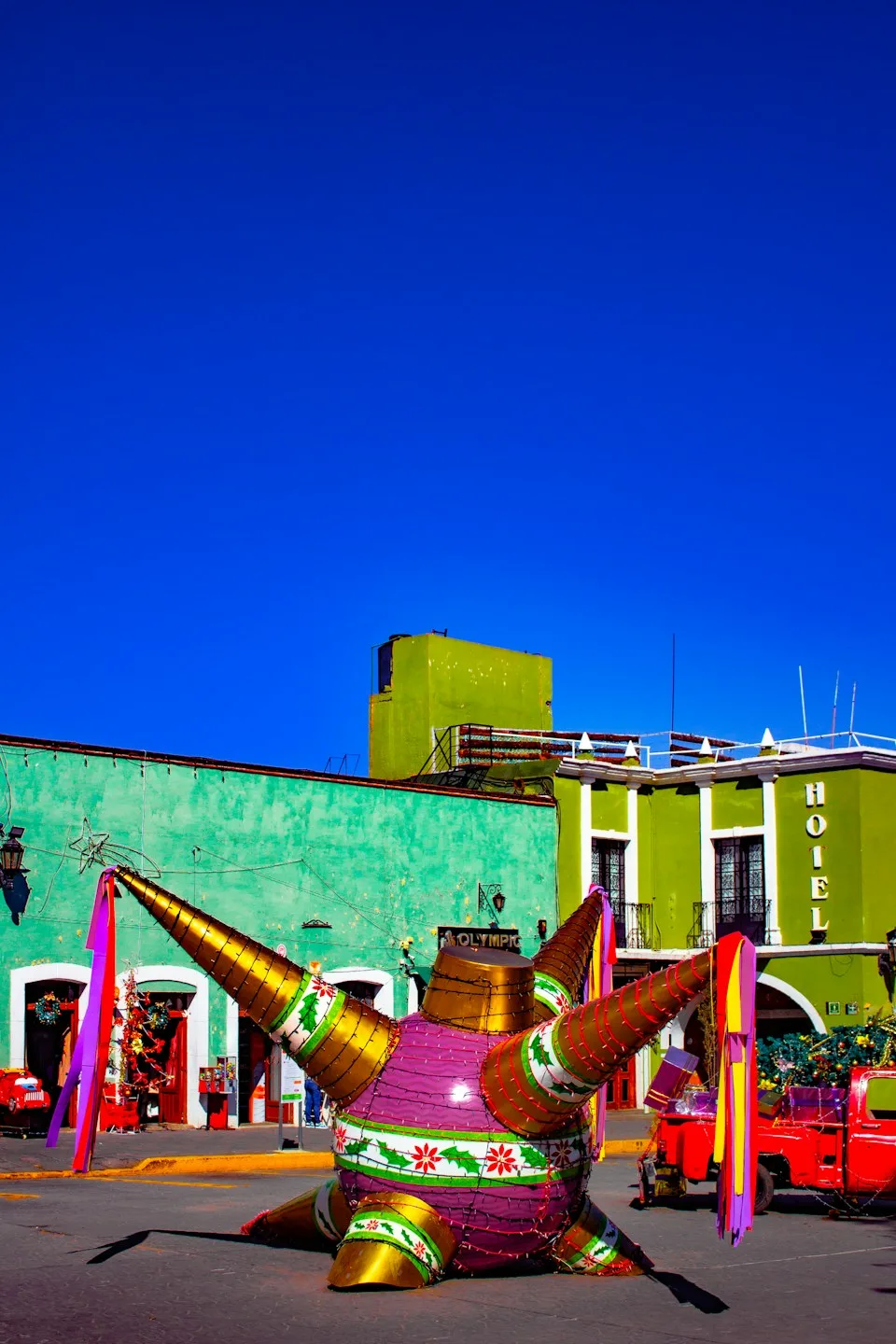
- The 2026 livestock exhibition was scheduled to open on 7 August and run through 31 August.
- Huamantla’s celebrated overnight carpets prepare a route for a procession honouring Our Lady of Charity.
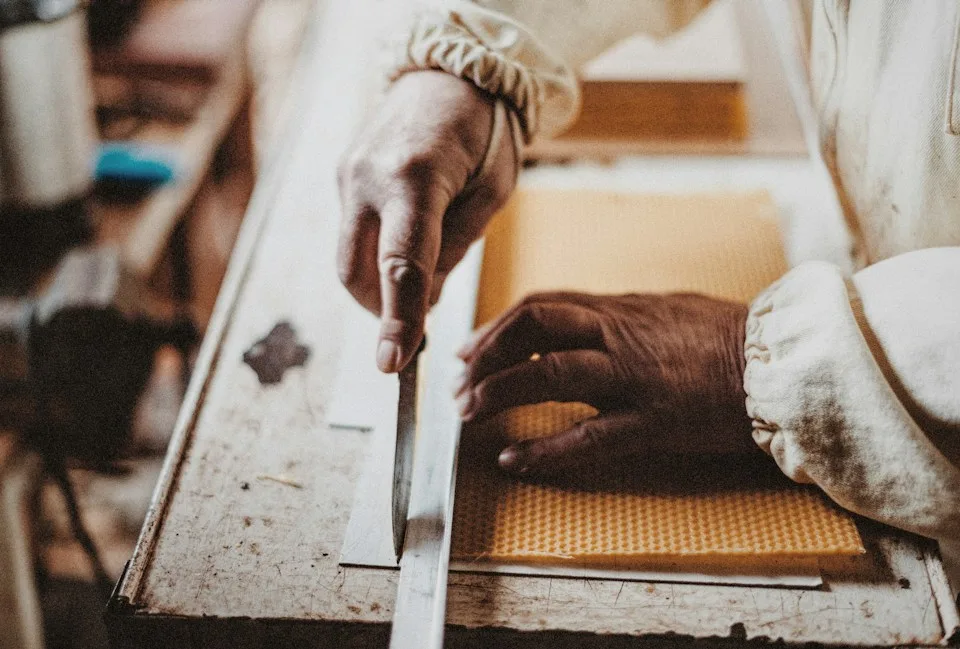
- Stencils and dyed wood shavings allow residents to make intricate patterns on the ground.
Inside this story 2 perspectives
A traveller arriving in Huamantla on 7 August could begin at a livestock exhibition, attend a service at the Basilica of Charity or listen to music on the town’s cultural stage. The municipal programme lists all three. The central Mexican town in the state of Tlaxcala calls its celebration the International Fair of Ephemeral Art and the Dahlia. One of the clearest explanations of the word ephemeral will come later in August, when neighbours decorate the streets with carpets intended to be walked over.
These are not textiles rolled out along a procession route. Residents work directly on the ground, laying stencils on asphalt or concrete and filling them with dyed wood shavings. In earlier years the designs have included flowers, ears of corn and patterns resembling embroidery. On the night of 14 August, families traditionally prepare the route for a procession honouring Our Lady of Charity. The intricate work disappears after the procession has passed.
A carpet made for one street
Reporting from Huamantla in 2023, EFE spoke to local maker Victor Alonso Fernandez about the stretch of road his family decorated. He described months of decisions about the design and the material, followed by ten to twelve hours working on the carpet. Those were the timings for his family’s work that year. They are also a reminder that what appears to be an overnight transformation has a long preparation period hidden from visitors.
A photograph of a finished section shows the colours and geometry. Watching earlier reveals different skills. Someone has to work out how to repeat a shape across the width of an irregular surface. Placing the stencil is only part of the job. Lifting it without disturbing the design matters just as much. The final purpose of the work also changes how it looks: the street becomes a route people will use, and the signs that they have passed are part of the occasion.
The fair before the famous night
The livestock exhibition gives visitors a reason to arrive at another point in the calendar. Huamantla’s municipal government scheduled it from 7 to 31 August, with the Friday inauguration at midday. It describes the exhibition as a place for the region’s agricultural producers and its food traditions. The same Friday programme lists music at more than one venue. Someone coming for a single image could miss how much of the town is involved in the fair.
There are two quite different ways to use a day here. One is to choose a scheduled performance and arrive in time for the opening. Another is to spend time at the point where a family’s preparation meets the public street. The second asks for patience and room for the makers to work. It also explains something the brightest photograph cannot: why anyone would devote months to an artwork the whole community expects to lose.