- The eve programme is on 1 August, followed by parades from 2 to 7 August.
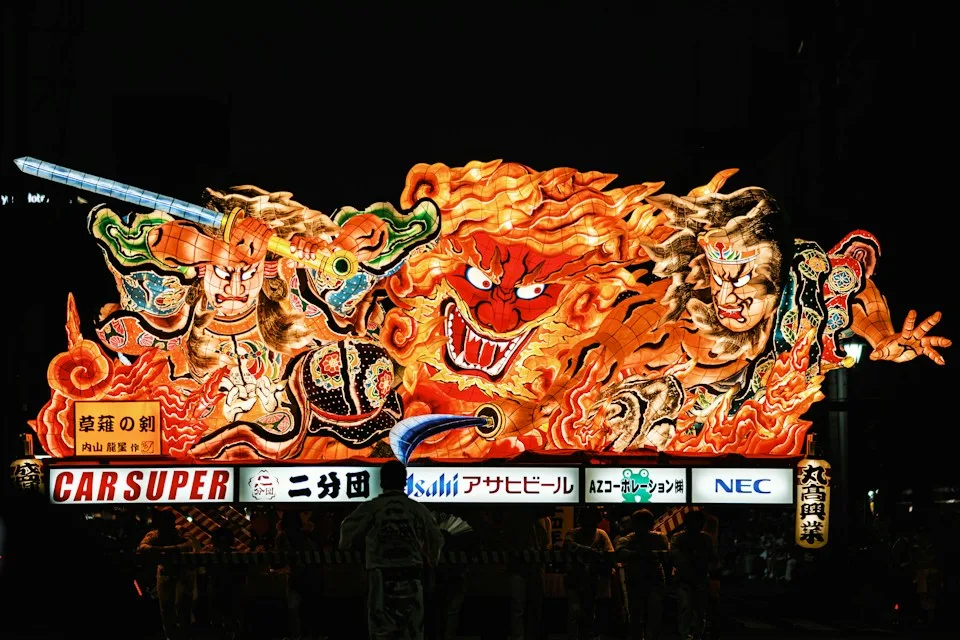
- Nebuta masters design the illuminated floats and oversee construction using wood, wire and paper.
- Visitors wearing the prescribed haneto costume can join the dancers at the parade’s starting point.
Inside this story 2 perspectives
The hardest choice for a visitor to Aomori’s summer festival may be whether to watch an illuminated float approach from the pavement or turn up in costume and move along with it. The northern Japanese city begins its Nebuta Festival eve programme on 1 August. The street parades run from 2 to 7 August. For travellers, there is an unusual possibility between buying a seat and remaining outside the spectacle. Those wearing the prescribed outfit can join as haneto dancers.
The costume is more involved than putting on a festival T-shirt. The Japan Tourism Agency describes rental shops around the route where staff help fit the layers, arrange the folds and tie the belts. Once dressed, participants go to the starting point and join a float team. It is a useful distinction for anyone visiting for the first time. An invitation to dance still comes with a local way of doing it.
What a lightbulb reveals
The illuminated sculptures, called nebuta, are built to be read from the street. A master decides the design, the structure and the colours. Planning for the next festival begins after the current one, with an initial design drawn by winter. Detailed pieces such as hands and faces come first. By May, according to the organisers’ account of the craft, the makers are assembling the wood and wire structure in the studios.
Light bulbs go inside. Traditional Japanese paper covers the framework and takes the painted details that spectators eventually see. The materials do two jobs at once. They must describe a figure large enough to be read from across a road while transmitting light from within. What looks like a single expression on a face is the product of decisions about where to bend a wire, attach paper and place a light.
One route, several vantage points
The city-centre parade route runs for roughly 3.1 kilometres. A pedestrian watching the floats from the side can follow how the whole composition comes into view and changes as it passes. A dancer has a different close-up, moving with the musicians and fellow participants. For someone keen to understand both the craftsmanship and the choreography, it makes sense to leave time for each perspective on different days.
There is another change of scale on 7 August. Organisers schedule a daytime procession and then an evening programme on Aomori Bay, with floats carried on boats and fireworks at the port. Arriving only after dark on that last day would mean seeing a seafront finale to a festival whose relationship with the city is easiest to grasp on foot.
The costume shops, makers’ studios, streets and harbour each offer a different answer to what a festival ticket buys. One of the most memorable experiences available in Aomori begins with someone showing a visitor how to dress.