- Objects sampled in Sweden, Denmark and the UK dated from about 1425 BCE to 400 CE.
- Protein analysis identified glues from several animals and material from plants.
- The researchers used controls and examined damage to help distinguish ancient material from contamination.
Inside this story 2 perspectives
There is a colour in the paint and there is the material that kept that colour where an artist put it. A visitor looking at a painted coffin or a fragment from an Egyptian tomb sees the first immediately. The second can be almost invisible. In a study reported by Ars Technica on 11 September, scientists investigated that less visible component by looking for traces of the proteins once present in paint, coatings and glue.
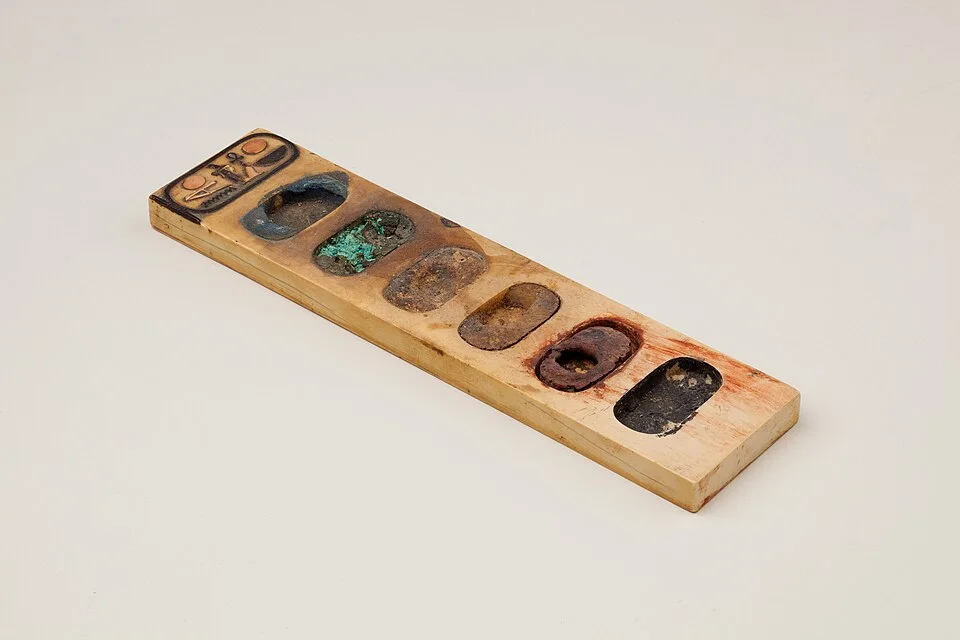
The objects included material now in collections in Sweden, Denmark and the United Kingdom. They ranged in date from about 1425 BCE to 400 CE and included painted coffin wood, wall paintings and pieces of architectural decoration. A study in Science Advances shows that ancient makers drew on several animal sources for glue. It also identifies sesame and moringa proteins where the researchers were investigating the organic materials in artworks.
Looking for the part that holds
A pigment gives paint its characteristic colour. A binder helps keep its particles together and attached to the surface below. In an ancient object there can also be a preparatory layer beneath the visible paint and adhesive used to join materials elsewhere. An answer as simple as “animal glue” can leave several questions open. Which animal contributed the material? Where in the object was it found? Could a later repair account for it?
The team used a method that examines proteins through mass spectrometry. Tiny samples matter in museum work because material removed for analysis cannot simply be put back. Protein fragments can retain features characteristic of particular groups of animals or plants, even where the original ingredient no longer has a recognisable shape. The records included cattle collagen alongside material attributed to several other animals.
Sensitivity brings its own difficulty. An instrument capable of detecting a faint signal from ancient material may also pick up contamination. The team ran controls and examined chemical alteration in the proteins. These checks help establish whether traces are consistent with the age and context of a sample, an essential stage before a result can support a historical interpretation.
From ingredient to intention
The sesame and moringa findings widen the range of materials worth looking for. They do not supply a complete recipe. A protein can identify the plant that contributed it without specifying every preparation step, the quantity a maker used or the reason for selecting it. The samples also cover centuries and objects with different purposes. Treating them as the contents of a single workshop would flatten a substantial span of history.
The findings give conservators a more precise question to bring back to an apparently familiar surface. Once the colour has been named and the subject recognised, what held the image together? An answer measured in minute traces can recover one more decision made by the person who painted it.