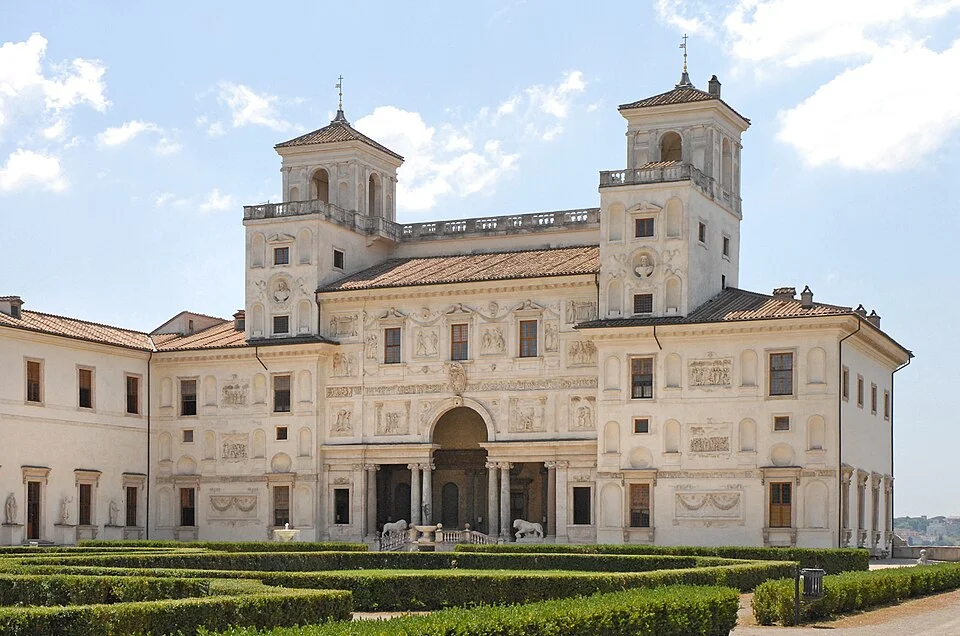
- Villa Medici scheduled the Roman premiere of 1937 on 18 September and a screening with the director on 20 September.
- The dialogue-free video draws on works by Anatoly Ligay and Khristofor Kan in Tashkent’s Nuron Collection.
- The Uzbekistan Art and Culture Development Foundation commissioned it for the 2025 Bukhara Biennial.
Inside this story 2 perspectives
The Rome screening of Daria Kim’s 1937 is timed to sixteen minutes. The material contained in it has travelled across generations and borders. Kim animates paintings by two Koryo-saram artists held in a private collection in Tashkent to address Stalin’s forced deportation of ethnic Koreans from the Russian Far East to Central Asia in 1937. The work is on the Villa Medici Film Festival programme for its Roman premiere on 18 September.
The festival lists the film as having no dialogue. That is a precise description of what an audience hears. The project has a sound design, alongside editing and animation by Iliya Braun. A viewer accustomed to a historical documentary built around an interview or narrated chronology will encounter a different arrangement. The names of the painters, the place where their work is kept and the people who brought it to the screen are unusually important parts of the programme note.
The painting before the frame
The artists are Anatoly Ligay and Khristofor Kan. Their paintings belong to the Nuron Collection, an archive of works by Korean artists in Uzbekistan. Kim credits Sherzod Seitov with photographing the artworks used in the video and Valery Khan with historical consultation. There is an entire sequence of decisions between a painting hanging in a collection and its appearance, moving, on a cinema screen.
That chain also helps a viewer understand what sort of evidence they are looking at. A painting made by an artist in a community shaped by displacement is a different historical object from film footage taken during a deportation. It can preserve an image, imagination or inherited memory on terms set by the painter. Animation brings duration to the work, deciding how long a viewer can attend to a part of it and when the frame should change.
A video with more than one home
The Uzbekistan Art and Culture Development Foundation commissioned the work for the 2025 Bukhara Biennial. Kim describes it as the first chapter of a larger installation, Hive Settlers. Its move to Rome changes the conditions of viewing. An installation can be entered while something else is already happening in the room. A festival screening gives an audience a common starting time and places the work in conversation with other films on the programme.
Villa Medici’s competition includes works of different lengths and forms, a fitting context for a short video with roots in a visual-art commission. A further screening and discussion with Kim are scheduled for 20 September. For viewers at either session, a detail worth taking away is that the archive is in Tashkent. A film about people forced across borders also names a place where the community’s artists and their work can still be found.