- The film follows Star, a woman facing a kinship-based land allocation in the fictional village of Sayit.
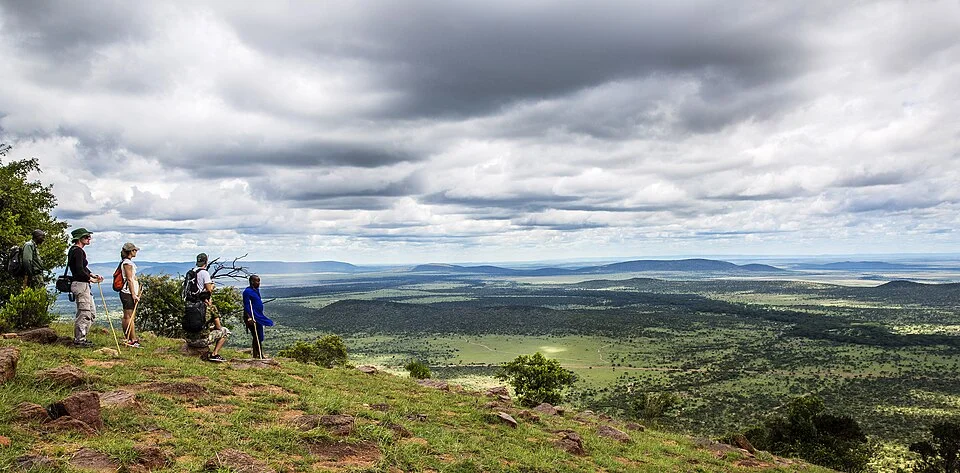
- Director Vincho Nchogu said much of the cast and crew came from Nkosesia, the Loita filming location.
- The September release plan put local screenings ahead of the Nairobi cinema run.
Inside this story 2 perspectives
Before its Nairobi cinema run this week, Vincho Nchogu wanted One Woman One Bra to play in Nkosesia, in Kenya’s Loita area. The director told Sinema Focus that two screenings were planned there for 7 September. It is where the feature was filmed and where many of the people who helped make it live. An international festival audience had already seen the work. For this particular story, the order of the Kenyan release has a significance of its own.
The Kenyan-Nigerian production follows Star, played by Sarah Karei. In the fictional village of Sayit, residents are about to receive title deeds to the land they have occupied for generations. For many, the paperwork offers a new kind of security. For Star, aged 38, unmarried and unable to identify her parents, it raises the possibility of losing her home. The allocation depends on family ties that everyone else seems better placed to demonstrate.
When a photograph becomes evidence
A book gives Star a possible lead. She discovers a photograph of herself as a child and notices a hand bearing markings she recognises. A stranger might look at the same picture and see only a portrait. Star has local knowledge that allows her to ask who else might have been there. The woman she approaches denies the connection, leaving the picture open to more than one reading.
That premise makes a bureaucratic question unusually cinematic. A title deed demands an answer that can be entered in a record. A photograph preserves far more than its caption can identify. Star must work between those two kinds of evidence while people who already know her decide what counts as proof. The film’s imagined arrangement belongs to its story. It is the pressure on this character, rather than a lesson in national land law, that carries the premise.
The people watching at home
In her statement for the Venice festival, Nchogu said that 70% of the cast and crew came from Nkosesia. She credited Amos Leuka with welcoming the production and bringing women from a travelling community theatre to audition. Those contributions change the meaning of a local screening. Some viewers can recognise the work of neighbours in faces, gestures and the choices made behind the camera.
The film travelled from Venice to other international festivals before the September Kenyan release. Its Nairobi run was announced for Prestige Cinema and Anga Cinema Diamond Plaza. A commercial run introduces another test alongside festival recognition, simply whether local audiences will choose to go and see the film.
For the viewer, one of its sharpest questions comes before any answer about land. A village can know someone well enough to call her a neighbour. What happens when the document that will decide her future asks for a different kind of knowledge?