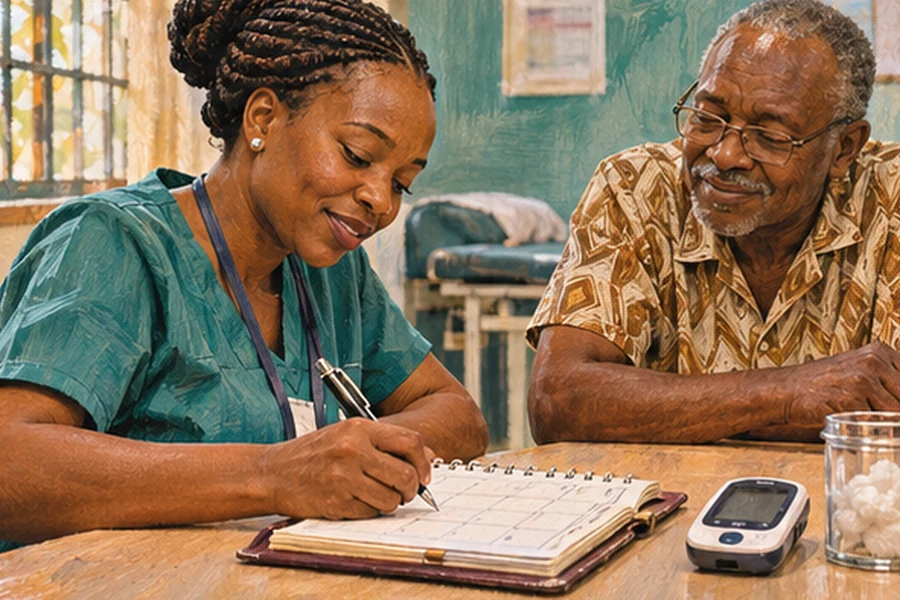
- WHO’s African Region called for earlier diagnosis and affordable continuing care.
- Someone seeking risk information has different needs from a patient collecting prescribed medicines.
- Follow-up access gives a different measure of success from the number of checks offered.
Inside this story 2 perspectives
A health service can count every blood-sugar check it offers on World Diabetes Day and still be unable to answer an important question. How many people whose test needed attention reached someone who could explain it, arrange any further testing and help them obtain ongoing care? On 14 November, the World Health Organization’s Regional Director for Africa called for earlier diagnosis and affordable treatment together. The two aims depend on different parts of a health system, and a patient can drop out between them.
The International Diabetes Federation chose early action as the focus of this year’s campaign. It includes reducing the risk of type 2 diabetes and finding diabetes earlier. A campaign address can put both ideas in one sentence. In a clinic or a workplace they involve different conversations. Someone seeking advice about future risk has different needs from a person who already has diabetes but cannot obtain their medicines reliably.
What happens after an unexpected result?
Type 2 diabetes can develop with mild symptoms that go unnoticed for years. A clinician can use blood tests to assess someone and interpret a result in context. At an awareness event, the practical value of an unexpected reading depends partly on what the person is told next. If a follow-up visit is needed, can they name the place, find out when it opens and bring the relevant information from the first encounter?
For someone paid by the shift, being asked to come back on a weekday has a cost before a medical bill is issued. For a clinic arranging the follow-up, a change of phone number or an unclear referral can turn a routine appointment into an unexplained absence. These are examples of obstacles a service can look for. They cannot be inferred from the number of tests performed on a single day.
Two measures worth keeping side by side
One is reach. How many people the service offered an initial assessment? A second is continuity. Among those advised to come back, how many could obtain the next appointment or collect the prescribed treatment? The second measure is harder to assemble, and it requires careful handling of patients’ personal information. It also helps explain why a well-attended public event may make remarkably little difference to everyday access to care.
Diabetes can affect eyesight, kidneys, nerves and the cardiovascular system. Timely detection and appropriate continuing treatment can reduce the risk of complications. Neither a one-day event nor a single reading tells an individual what treatment they need. For the organisers deciding whether a campaign succeeded, one telling sign will come later, when the service learns whether the person sent home with a referral was actually able to use it.