- Seventy per cent of respondents to an industry poll reported prolonged immigration queues for international clients.
- The poll did not establish that 70% of passengers faced a delay or give a typical waiting time.
- Immigration, baggage, onward check-in and meeting a driver can each change a transfer timetable.
Inside this story 2 perspectives
Landing time is a precise entry on an itinerary. The moment a passenger comes through the arrivals doors to meet a driver usually is not. Between those two entries a flight can arrive exactly as scheduled and a carefully planned transfer can still go wrong.
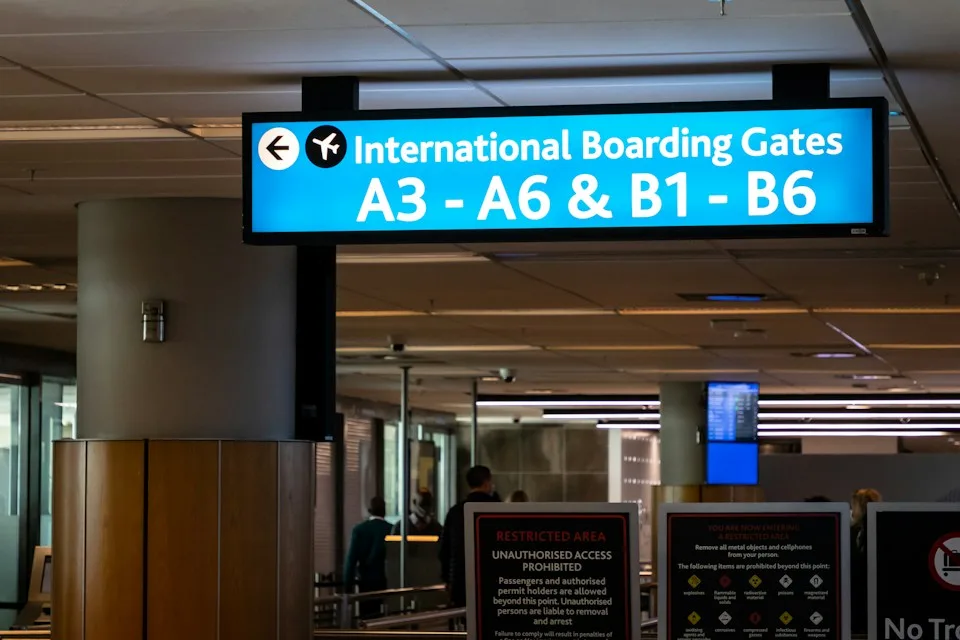
That gap drew attention in South Africa this week. In a poll reported on 19 August, the trade publication Tourism Update said 70 per cent of respondents had clients experiencing prolonged airport immigration queues associated with unstaffed counters. Hospitality representatives described knock-on effects on onward travel, transfers and hotel arrivals. For a visitor landing at Johannesburg’s O.R. Tambo International Airport, the practical issue is how much of the next part of the journey depends on being through those doors at a particular time.
What the poll can tell a visitor
Seventy per cent is a proportion of the people who answered an industry poll. It is not a proportion of all international passengers, a measurement of how long the average person waited, or a prediction for a particular flight. Readers who have experienced disruption may have stronger reasons to take part than readers whose clients sailed through.
Even so, the reports identify a genuine planning problem. A driver monitoring a flight can see when the plane has landed. The driver may have no way of knowing whether their passenger has reached immigration, collected a bag or made it into the arrivals hall. A tour leaving at a fixed time cannot necessarily move its departure to match an individual flight.
It is also worth distinguishing a concrete complaint from an explanation still awaiting confirmation. Tourism Update said it asked the Border Management Authority about a reported staffing figure and had received no comment by publication. An unanswered request cannot establish how many officials were on duty at a particular terminal or hour.
Plan the meeting as carefully as the flight
For someone travelling on a tightly timed itinerary, a useful pre-departure conversation begins with who will be tracking the arrival. Where will the driver wait? Which number will reach the operator if mobile service is slow to connect? What happens to the onward booking if the aircraft is on time but the passenger emerges late? Answers are more useful than an unsupported assurance about a normal queue.
Air-to-air connections pose their own questions. The airline can confirm which baggage, check-in and transfer arrangements apply to the actual tickets. A charter, road transfer or first-night lodge arrival may be governed by separate arrangements with a different provider.
A generous connection on paper is only as useful as the assumptions behind it. Writing down who can change the onward booking, alongside the number of the person waiting outside, makes a South African arrival easier to manage whatever the queue looks like that day.