- The fossils come from the roughly 105-million-year-old Toolebuc Formation in Queensland.
- The researchers named the bird Tenuicruris piscanexum.
- Limb anatomy helps distinguish the species. Reconstructions of its full appearance also draw on better-preserved relatives.
Inside this story 2 perspectives
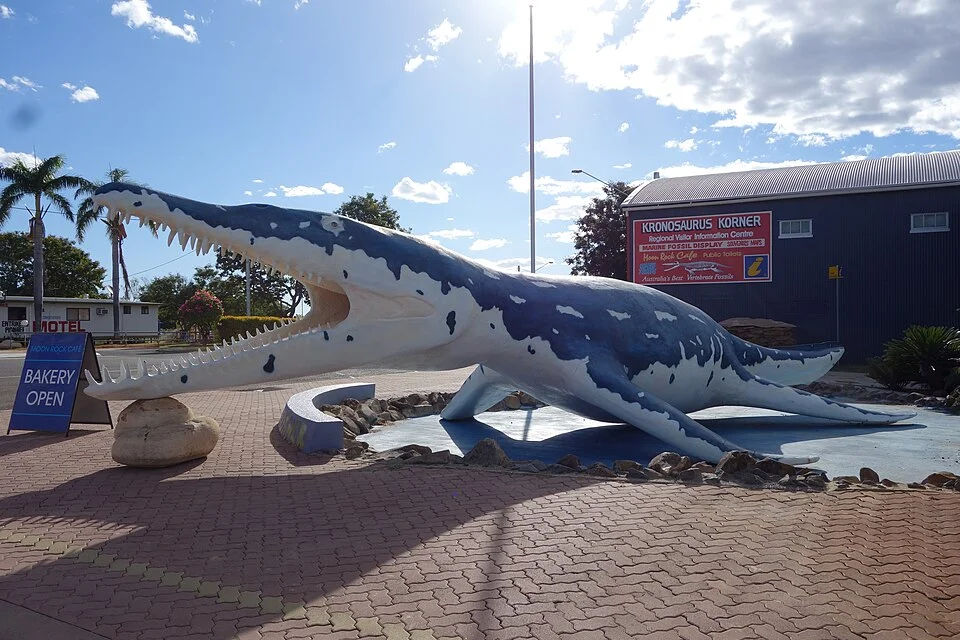
A public fossil-collecting area near Richmond, in outback Queensland, is a good place to find evidence of the sea that once covered this part of Australia. Fish remains turn up there, along with teeth from marine reptiles. What caught Kevin Petersen’s attention was something uncommonly long and slender. The former curator of Richmond’s Kronosaurus Korner museum sent photographs to palaeontologist Matt White at the University of New England. White recognised bird bones. He had examined similar material in China years before.
The find, reported by the Australian Broadcasting Corporation on 1 October, has become part of the description of Tenuicruris piscanexum. The first name refers to its slender leg. The second recalls the fish-rich rocks in which the fossils were found. The Toolebuc Formation was laid down in a shallow inland sea around 105 million years ago. A pair of isolated bones from that setting has contributed something rare enough to count on two fingers. This is only the second Cretaceous bird from Australia to receive a formal species name.
What a lower leg can establish
Two parts of a bird’s limb feature in the discovery. The tibiotarsus is the long lower-leg bone, formed partly from bones that fuse during development. The tarsometatarsus lies farther towards the toes. The main specimen used to distinguish Tenuicruris is a left tibiotarsus measuring 64.5 millimetres. Its scientific value lies in more than the fact that it is long and thin.
Researchers examined where the ridges run down the shaft and the shapes of the surfaces at its lower end. One conspicuous crest occupies approximately the upper quarter of the shaft. Another reaches farther down. The combination of these features helps distinguish the animal from other members of an extinct bird group called the enantiornithines. The other named Australian Cretaceous bird, Nanantius eos, belongs to this group too. It was described in 1986.
What an artist has to supply
An illustration accompanying the discovery shows a whole animal. White told the ABC that it was likely roughly the size of a scrub turkey and probably had teeth. The available bones cannot, by themselves, show the beak, the arrangement of the feathers or the outline of the wings. More complete remains of birds from China and Germany helped researchers and the artist fill in those parts of the picture.
That gap explains why something as unshowy as a section of leg deserves a museum label of its own. Bird bones are fragile, and the features that make them light also help explain why so few survive burial and fossilisation intact. A drawing gives a reader a bird to picture. The carefully documented ridge on the actual bone is what gives another researcher a way to check the identification against the next slender fossil somebody notices among the fish.