- The central bank kept its reference interest rate at 4.25% on 7 October.
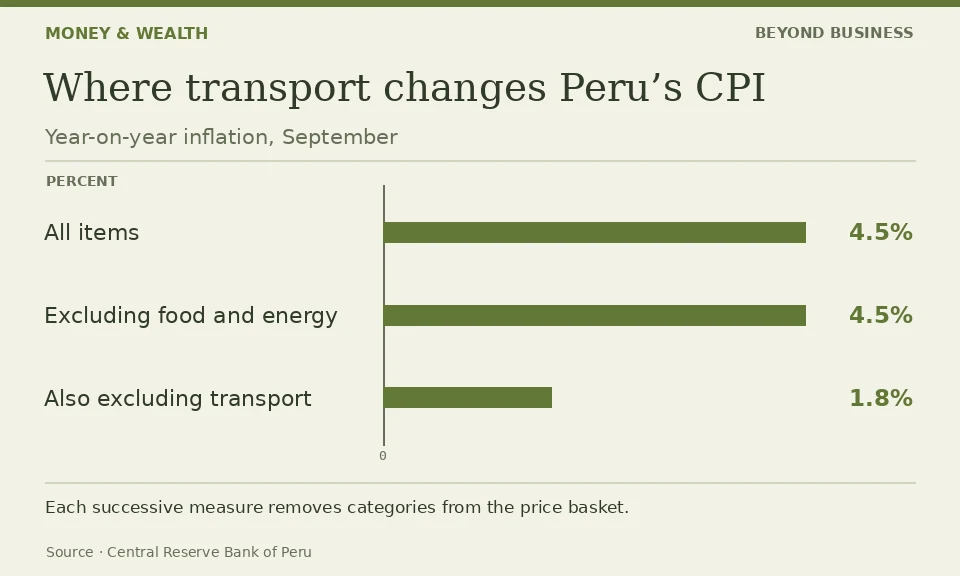
- Annual September inflation reached 4.5%, up from 4.4% in August.
- Inflation excluding food, energy and transport was 1.8% year on year.
Inside this story 2 perspectives
Peru’s central bank left its reference interest rate at 4.25% on 7 October, its thirteenth consecutive month at that level according to BBVA Research. Behind the decision are two September figures that at first look remarkably alike. Annual headline inflation was 4.5%. Annual inflation after food and energy were taken out was also 4.5%. The identical results conceal a particularly important difference in what each measure still contains.
The rise in the headline rate from 4.4% in August was attributed mainly to fuels and electricity. Taking those categories out of the calculation removes their direct prices. A bus fare, however, remains a transport service even when dearer fuel helped push it up. Peru’s central bank has been paying attention to the effect of earlier fuel price increases on transport costs, particularly the increases recorded in March and April.
A third number changes the view
Remove transport as well as food and energy and the annual rate was 1.8%, according to the central bank figures reported by El Comercio. On this narrower definition, inflation has been below 2% since April last year. That does not make the narrower index a better approximation of any particular household’s expenses. A commuter pays the fare, whatever category a statistical table assigns it. The narrower measure helps answer a policy question about how broadly large price increases have spread.
The comparison also explains why it is hazardous to reason from the title of an index alone. An index excluding energy can still reflect the effects of a change in energy prices through an entirely different service. Meanwhile a household using less private fuel might see a transport increase on the bus. Following the path from the original cost to the price eventually paid makes the numbers easier to reconcile.
Which direction is the bank looking?
September prices rose 0.12% over the month. That relatively small monthly move can coexist with a larger annual increase because the twelve-month measure includes earlier months. The central bank also considered inflation expectations for the coming twelve months. At 3.1%, those were slightly above the upper end of its target range. An expectation is a view about prices to come, distinct from the pace of price changes already recorded.
The board flagged a risk that El Niño and geopolitical tensions in the Middle East could prolong pressures on prices. It said it would follow underlying inflation, expectations, economic activity and the duration of supply shocks. The October decision gives savers and borrowers a reference rate for now. It also gives them a way to read the next set of figures. Whether inflation is spreading into more prices, or an earlier transport increase is gradually passing through the annual comparison, matters to the interpretation of the same 4.5%.