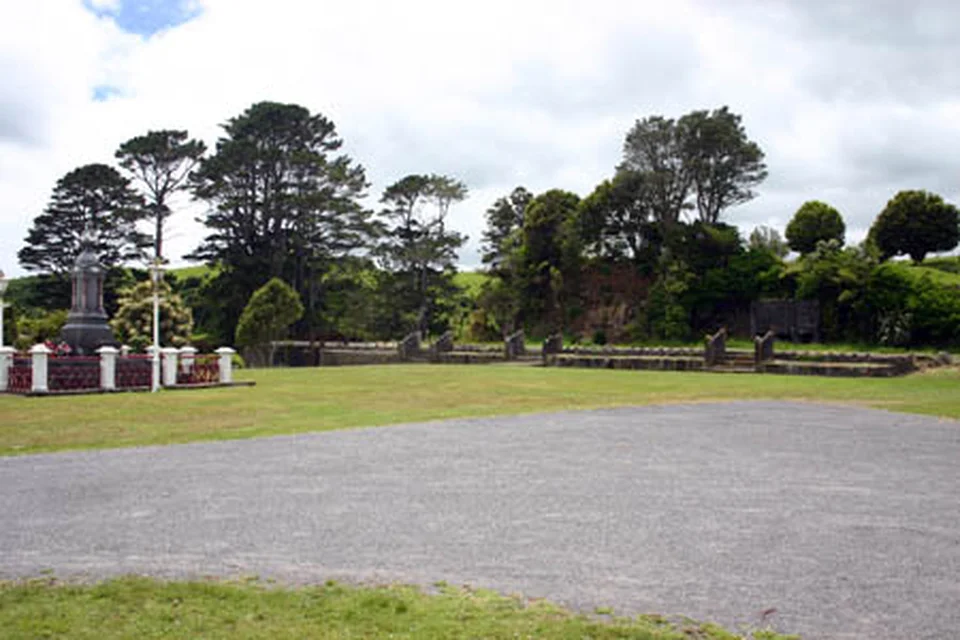
- Crown forces entered Parihaka in western Taranaki on 5 November 1881.
- Te Whiti-o-Rongomai and Tohu Kākahi led a community practising nonviolent resistance to land confiscation.
- The Wellington programme joined musical traditions and a student performance on the 145th anniversary.
Inside this story 2 perspectives
At St Mary of the Angels in central Wellington, the evening planned for 5 November included taonga pūoro, haka, Irish folk music, piano, poetry and a performance by students from St Bernard’s College. The point of bringing such different forms together was a place some distance away. Exactly 145 years earlier, Crown forces had invaded Parihaka in western Taranaki, a Māori community known for its organised nonviolent resistance to land confiscation.
The Wellington commemoration, Homage to Te Raukura, was organised by the Archdiocese’s Ecology, Justice and Peace Commission. The published programme offered free admission and named author Richard Shaw as host. Its variety of performers gives the evening a present-day setting. Understanding what it remembers requires returning to acts that were deliberately ordinary: ploughing soil and repairing a fence.
Land claimed through ordinary work
Parihaka, established in the mid-nineteenth century, became a home for Māori dispossessed of land. Under Te Whiti-o-Rongomai and Tohu Kākahi, people asserted continuing ownership by ploughing in places where settlers and the colonial government claimed authority. When roads cut through cultivated ground and fences were opened, residents repaired them. These were practical acts of occupation that also made a political argument about whose land it was.
The government imprisoned ploughmen and fencers, including people detained without trial. On 5 November 1881, roughly 1,600 troops and volunteers entered Parihaka. Children greeted the force with song while people gathered peacefully. The leaders were arrested, many residents were dispersed and much of the village was destroyed. To describe the community’s response as peaceful is to identify what its people chose to do. It leaves the force used against them fully visible.
What a commemoration can carry
The Wellington programme included Māori instruments alongside choral music and contributions from traditions carried to Aotearoa from elsewhere. Bringing them into one evening need not imply that everyone present stands in the same historical relationship to Parihaka. Some people inherit knowledge of the community and its losses. Others are learning how the state and settlers acquired authority over the land on which they now live.
CathNews also recalls that Caritas Aotearoa New Zealand consulted with the Parihaka community when developing an earlier resource for parishes and schools. That detail offers a test for commemoration beyond the performance itself. A school or church can invite an audience to remember, while the people whose history is being told retain an essential role in how it is understood. The work of listening begins again when the final item on the programme ends.