- In a familiar central Mexican form, thin strips of dough represent bones.
- Oaxacan traditions include egg-rich breads and decorated faces made by specialist artisans.
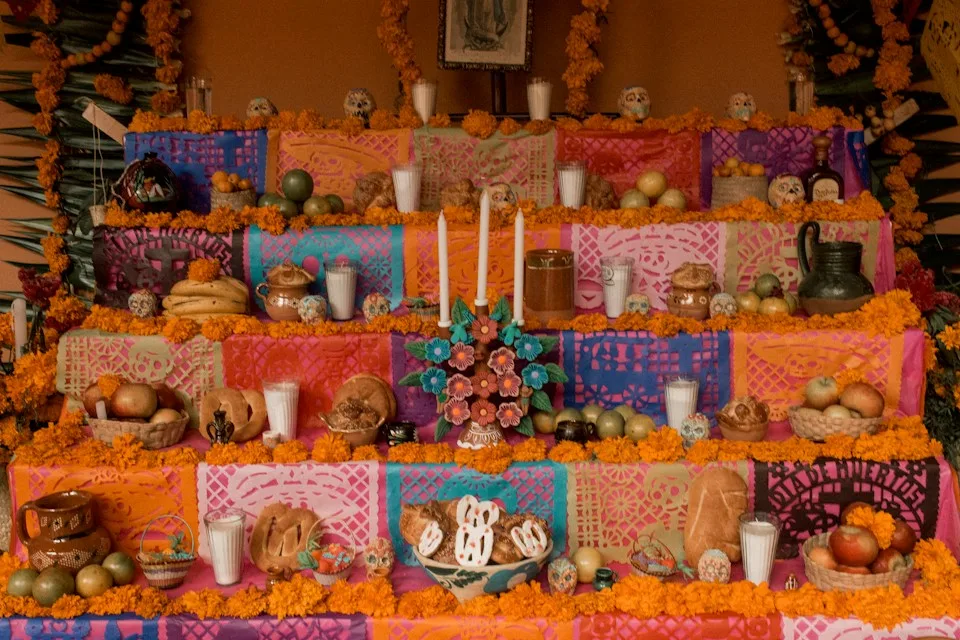
- The loaf takes its meaning from its place among offerings as well as from how it is baked.
Inside this story 2 perspectives
In one Mexico City bakery the recognisable part of a pan de muerto is made separately from the bun. On 30 October Smithsonian Magazine described the team at Panadería Rosetta forming thin pieces of dough into huesitos, little bones, and crossing them over a round loaf. The shape is familiar on bakery counters in central Mexico as Día de Muertos approaches. Travel south and the detail that catches the eye may be a painted face instead.
Both breads belong to a much wider practice of preparing food for the dead. A family ofrenda can bring together photographs, flowers, candles, water and things a relative loved to eat. The bread therefore performs a different role from an anonymous loaf on a store shelf. For a person making an offering, its destination and the individual being remembered can matter as much as the recipe.
Where the decoration comes from
In earlier reporting from Oaxaca, National Geographic traced some of the small faces, or caritas, used to decorate breads associated with Tlacolula to artisans in Miahuatlán. Its account followed a family working with moulds and painting the faces. That division of labour reveals something a photograph of a finished loaf rarely shows. The oven that bakes the bread and the hands that shape its decoration may be in different towns.
Mexico’s foreign ministry describes egg-rich versions in Oaxaca and a dark, shiny round loaf known as pan de hule in Michoacán. The National Autonomous University of Mexico records further variations, including bread shaped as animals and figures linked to particular offerings. No single decoration provides a reliable shortcut to the meaning of every loaf. Asking where it was made is more revealing than trying to decide whether it conforms to a standard photograph.
The bread on the altar and the bakery counter
The holiday brings together Indigenous practices of remembering the dead and Catholic observances associated with All Saints’ and All Souls’ days. Writers and scholars have offered more than one account of how specific breads emerged from that meeting. Regional forms, surviving baking practices and family explanations provide evidence at different scales. A confident origin story for every version would exceed what those sources establish.
At a counter, an orange-scented loaf can be bought for the simple pleasure of eating it. The same kind of loaf on an altar may carry a name, a memory or a family habit. There is no requirement that the shopper and the person making the offering understand it in exactly the same way. Attending to the little bones or the painted face is a start. Learning who made that detail and for whom brings the bread closer to home.