- Borders & Other Myths opened on 13 September at Affinity Gallery in Lagos.
- Laura Twagirayezu curated the group exhibition of six artists.
- The show ranges across painting, photography, sculpture and installation practices.
Inside this story 2 perspectives
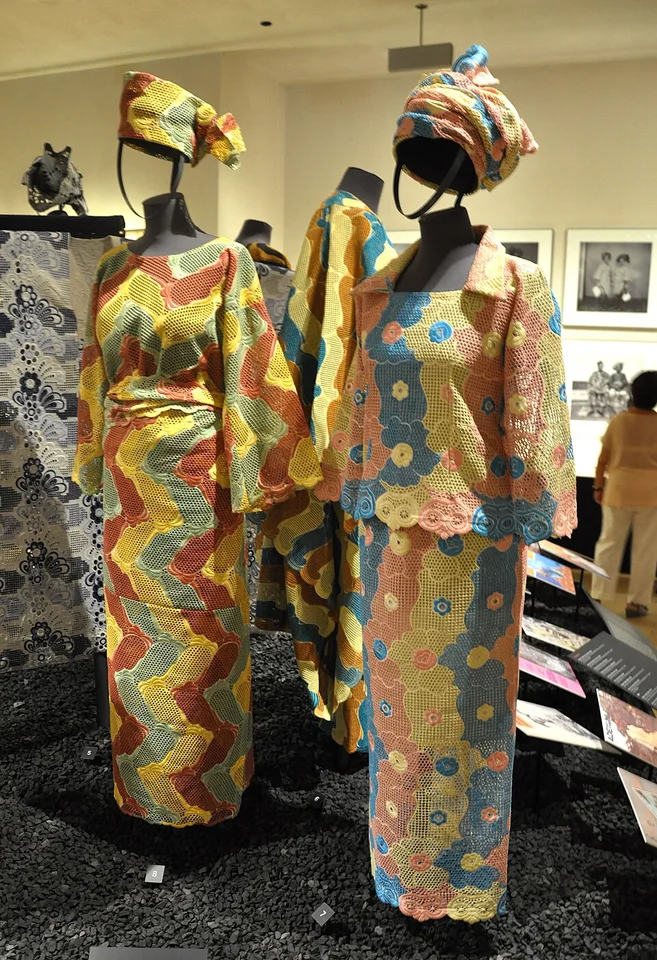
A line on a map is an obvious way to begin a conversation about borders. A piece of lace offers a less predictable starting point. An observer can recognise its pattern and delicacy long before asking where it was made, who could afford to wear it or how its meaning changed when it arrived somewhere new. Those questions about a material run through the Lagos exhibition Borders & Other Myths.
Curated by Laura Twagirayezu, the group show opened at Affinity Gallery on Sunday, 13 September. It brings together Cortney Herron, Chigozie Obi, Carine Mansan, Hamed Maiye, Myles Igwebuike and Ernest Amabibi. Their approaches include painting, photography and sculpture. The gallery asks how fixed a boundary can really be when people, stories and the materials used to tell them travel across it.
How a fabric acquires a past
The gallery describes Maiye’s work with lace as an investigation of the histories contained in a seemingly delicate material, including extraction, colonial violence and aspiration. These associations can be present at the same time. Cloth handed down within a family can be treasured for a completely different reason from the reason it first arrived in a shop. Asking where one meaning ends and another begins is a productive way to read a show about borders.
The same question can be put to a portrait. Lagos-based artist Chigozie Obi uses portraiture to bring personal experience into a larger cultural setting. The gallery presents self-representation in her work as something a person can shape and revise. A portrait gives its subject a particular form at a particular moment. Seeing it as part of an ongoing practice leaves room for the subject to claim a different version later.
What a photograph can inherit
Ernest Amabibi’s photographic series The Craftsman approaches the relationship between what a person inherits and the possibilities they can make for themselves. Alongside it, the gallery describes Carine Mansan’s mythic figures and use of blue as means of connecting the natural world, memory and spiritual experience. Each artist is working with a different kind of inheritance. What travels may be an image, a way of making an object or a story about how the world is ordered.
A viewer can enter this exhibition through its large historical question or through the smaller business of attending to one medium. Lace makes a particularly exacting guide. The longer one follows its threads, the harder it becomes to say that its meaning belongs wholly to the place it was first produced or to the person who last wore it. The object is continuous even where the map shows a line.