- Scotland’s Josh Kerr won in 3 minutes 54.12 seconds after escaping a crowded pack.
- Australia’s Cameron Myers took silver ahead of Kenya’s Timothy Cheruiyot.
- Glasgow restored the men’s mile to the programme for the first time since the 1966 Kingston Games.
Inside this story 2 perspectives
Josh Kerr had the world record and a Scottish crowd on his side. What he lacked for much of Saturday’s Commonwealth mile final in Glasgow was somewhere to run. Boxed in during the early laps at Scotstoun, the favourite had to find a route through a field that included Kenya’s Timothy Cheruiyot and Australia’s Cameron Myers. The moment he found it helped explain why reviving an old event could produce something more interesting than a tribute.
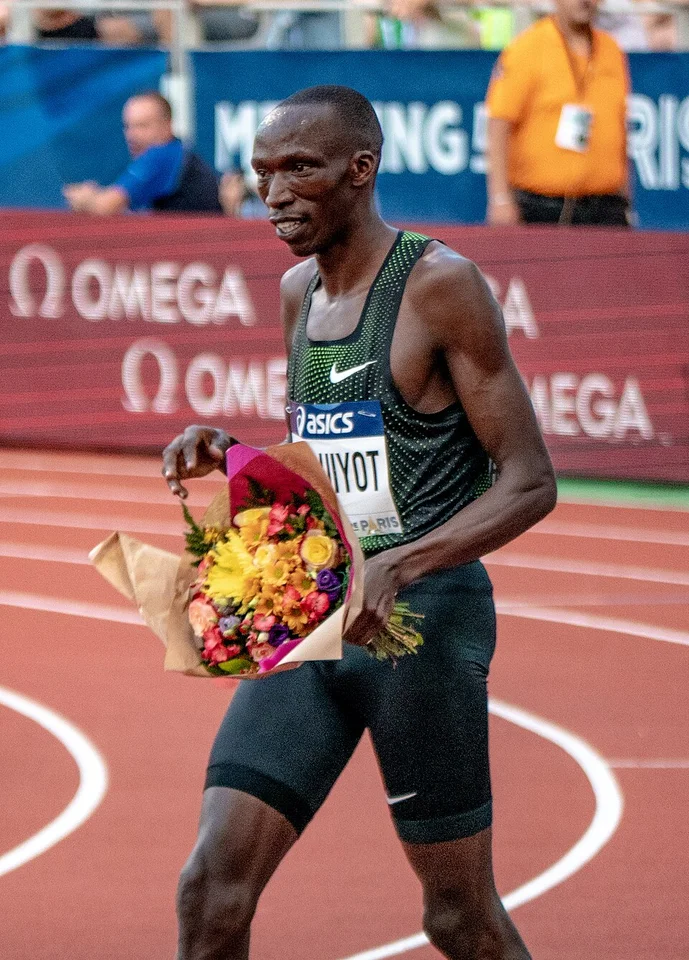
Kerr moved up on the outside and reached third place by the bell. He passed Cheruiyot and Myers along the back straight, then pulled far enough clear to acknowledge the crowd in the closing metres. His winning time was 3 minutes 54.12 seconds. Behind him, the finish was considerably tighter. Myers took silver in 3:55.26, only 0.15 seconds ahead of Cheruiyot in bronze.
A race with two finishes
A camera tracking Kerr alone could tell the story of a home win. A camera lingering on the line would have found another race in progress. Kerr finished 1.14 seconds ahead of Myers, a much larger interval than the one separating the next two places. For Australian and Kenyan supporters, the question of which colour medal was coming home remained open well after Scotland’s answer was clear.
Scotland had its own second storyline. Jake Wightman chased Kerr for part of the closing lap before fading to sixth. Scottish Athletics reported afterwards that a leg problem had nearly kept him out of the Games. For a few moments the running order had offered the possibility of two Scottish medallists. The results tell a different story from the one a spectator might have anticipated midway down the back straight.
What sixty years away changes
The men’s mile last appeared at a Commonwealth Games in Kingston in 1966. Organisers brought it back to mark a history stretching further back to Vancouver and Roger Bannister’s famous 1954 race. Glasgow also had a current reason to give the event prominence. Kerr arrived having set a world record in London the previous month. The athlete capable of running the fastest mile was on the track in front of a home audience.
A record attempt and a championship reward different things. In Glasgow, Kerr needed to be able to move when space appeared, and then to go past people who wanted the same space. The winning clock alone cannot show a runner waiting for the way through.
The same meeting gave Australia the first three places in the women’s mile, led by Abbey Caldwell. A format restored to celebrate a piece of Commonwealth history ended up offering several ways to remember the day. In Scotland it will belong to Kerr. In Kenya, the medals table will also preserve the few strides in which Cheruiyot and Myers separated silver from bronze.