- The Monetary Policy Committee kept its policy rate at 8.75 per cent.
- Commercial banks’ average lending rate was 14.3 per cent in July.
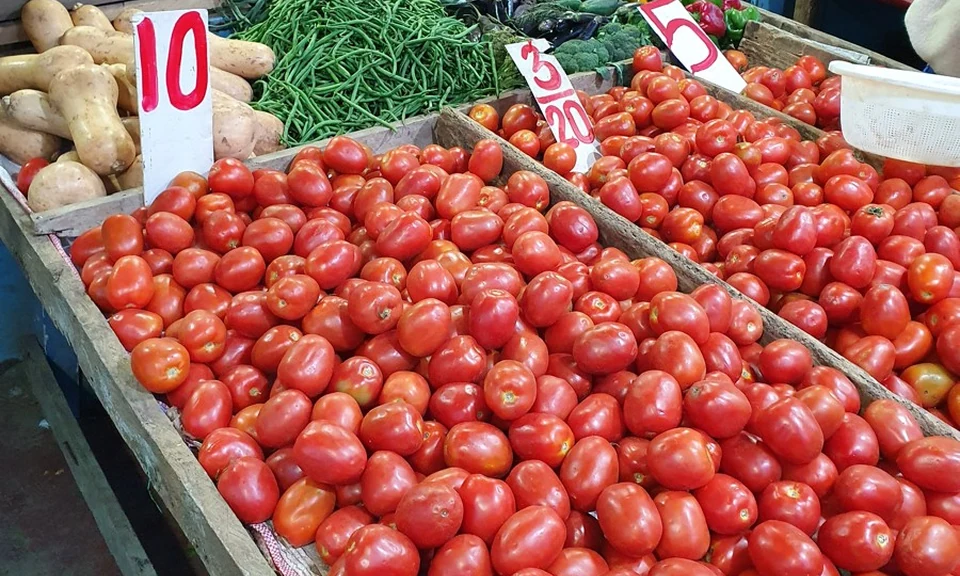
- Tomatoes fell in price from June but remained substantially more expensive than a year earlier.
Inside this story 2 perspectives
The Central Bank of Kenya kept its benchmark rate at 8.75 per cent on 11 August. A trader who buys vegetables on credit may recognise very little in that unchanged number. The price of the next loan, the cost of a crate of produce and the price customers are willing to pay can all move while the central bank leaves its rate exactly where it was.
Start with borrowing. The bank said the average rate charged by commercial banks was 14.3 per cent in July, slightly below June’s 14.4 per cent and down from 17.2 per cent in November 2024. The benchmark and the average retail lending rate describe different transactions. A particular borrower’s contract, risk and repayment schedule can put the actual cost on either side of the commercial average.
One kilogram, two comparisons
Now turn to the price of tomatoes. Kenya’s statistics office put the average cost of a kilogram at 113.47 shillings in July. A month earlier it had been 117.87 shillings. A year earlier it had been 84.88. The same kilogram therefore cost 3.7 per cent less than in June and 33.7 per cent more than the previous July.
Which comparison matters depends on the question. A trader replenishing stocks every few days may welcome a smaller bill this month. A household whose income is little changed from last year may still feel that tomatoes have become difficult to afford. And tomatoes are only one item in either basket. The July price of a kilogram of kale rose from June, as did that of Irish potatoes.
Those examples explain why a small change in the headline inflation figure can conceal a noticeable change in one meal. Kenya’s overall annual inflation rate was 6.5 per cent in July, against 6.4 per cent in June. Food prices, energy, transport and the other items in the index do not all follow the same path.
Where a rate decision reaches the counter
The central bank reported annual private-sector credit growth of 10.2 per cent in July, after 10.6 per cent in June. That gives an indication of the wider lending environment. It says little about whether one shop can borrow at a workable price to expand its stock next week.
For that shop, the three prices belong on different lines of the same calculation. What will the next delivery cost? What margin is left at the till? And what will it cost to finance the interval between paying the supplier and making the sale? The central bank’s decision supplies background for the third question. The trader still needs an actual loan quote and a visit to the market to answer it.