- The 2026 festival is scheduled from 3 through 18 October in Jinju.
- Events occupy both the Namgang River and the Jinjuseong Fortress area.
- Korea’s tourism authority traces the floating-lantern tradition to the sixteenth century and the independent modern festival to 2000.
Inside this story 2 perspectives
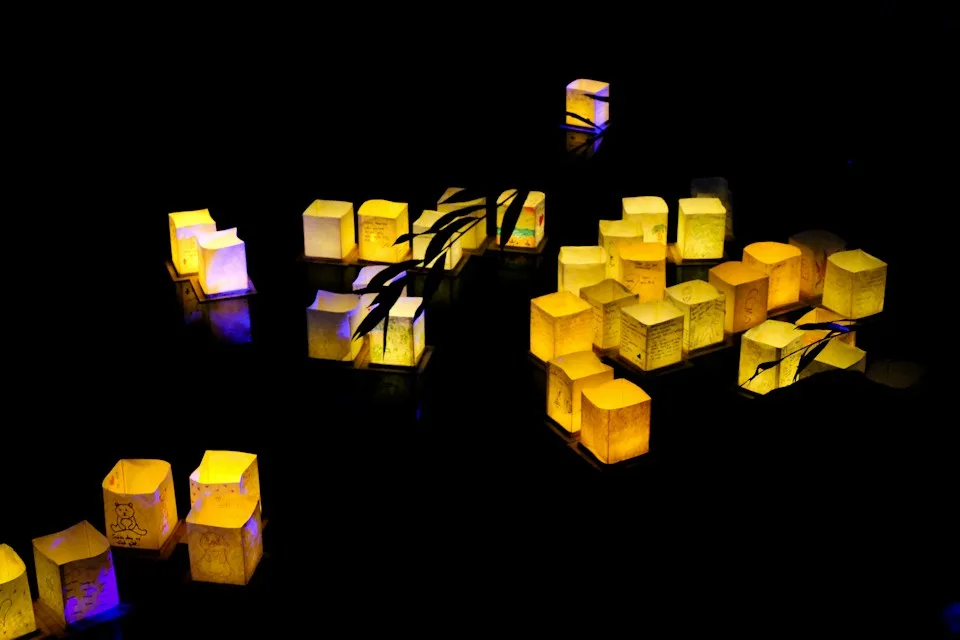
The photograph most likely to tempt someone to Jinju shows lights reflected in the Namgang River after dark. It leaves out half the map. On one side of the water stands Jinjuseong Fortress, whose history helps explain why lanterns belong on this particular river. A visitor who arrives before sunset has time to understand the relationship between the two places before their appearance changes for the night.
The 2026 Jinju Namgang Yudeung Festival is scheduled from 3 to 18 October in South Korea’s South Gyeongsang Province. The grounds extend along the river, its bridges and the fortress area. The Korean word yudeung refers to floating lanterns, although the modern programme includes illuminated displays on land as well. A single viewing spot can give a fine impression of one part of the festival and a poor idea of its extent.
A river with a history
The Korea Tourism Organization traces the use of floating lanterns here to the sixteenth-century defence of Jinjuseong during the Japanese invasions of Korea. The river carried signals as well as light. In later generations lanterns became associated with remembrance. Knowing that background changes the view from the bank. The water was part of a community’s communications and history long before it offered a surface for photographs.
The modern event has a separate chronology. Jinju included a lantern observance in the Gaecheon Art Festival, first held in 1949. Since 2000 the Namgang lantern festival has taken place independently. Calling it a centuries-old tradition and describing it as a modern festival are therefore compatible, as long as the dates are attached to the right parts of the story.
Two walks at different hours
Before dark, a visitor can follow the shape of the fortifications and identify where paths, bridges and riverbanks meet. After sunset, the same route gives a second set of landmarks. A lantern seen head-on from one bank may dissolve into a long reflection from another angle. A light attached to the fortress wall describes a fixed edge. One floating on the water can change position against it.
The programme also offers participatory activities including wish lanterns. Visitors who hope to take part as well as observe should check the organiser’s schedule for that activity and its location. Festival-wide dates do not establish the time or availability of an individual session.
Sixteen days allow some room to choose a visit that suits a particular traveller. The basic sequence does not depend on a special performance. See the river and fortress while they are still legible in daylight, then return as the lanterns take over. The subject of the photograph becomes more interesting once the setting is familiar.