- The research appeared in Science on 15 October.
- ICESat-2 observations provided evidence on height and the surroundings of ice cliffs.
- Fast calving and sustained, self-amplifying retreat are different outcomes. Local conditions can interrupt the sequence.
Inside this story 2 perspectives
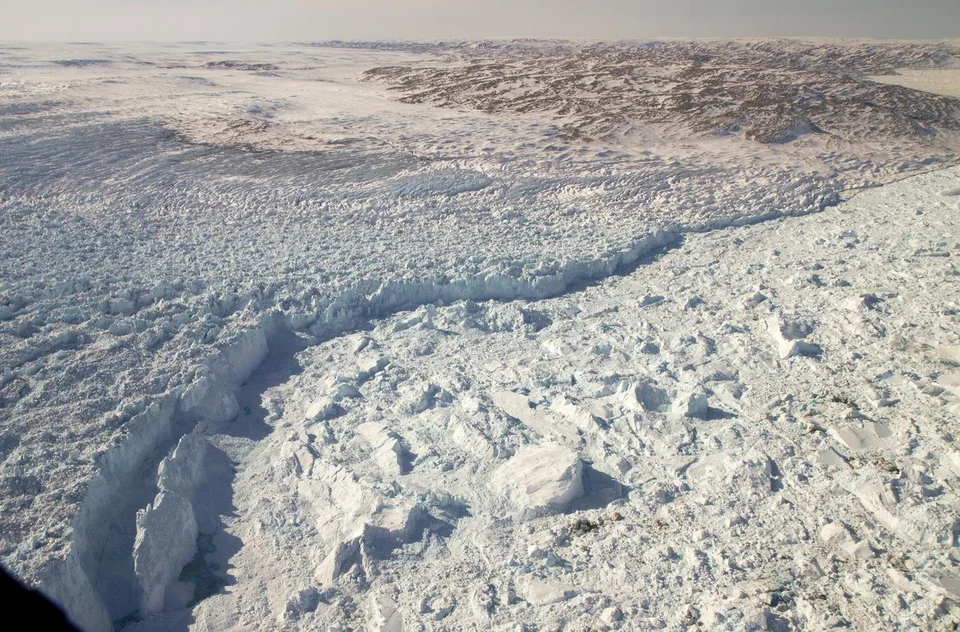
When a piece of ice breaks off the face of a glacier, the next question is what has been left behind. One theory proposes that an exceptionally tall cliff can collapse under its own weight and expose an even taller face. If each new cliff fails in turn, retreat could accelerate. A study published in Science on 15 October used satellite observations to examine how often the conditions for that sequence actually occur.
Researchers led by Caroline Needell, a doctoral student in the MIT–Woods Hole Oceanographic Institution joint programme, worked with 15,330 observations of ice cliffs around the margins of the ice sheets. NASA's ICESat-2 measures elevation by timing laser pulses sent down to the surface and reflected back. That gave the team a way to compare cliffs over a wide area using a common instrument. They could also look at features that a single measure of height leaves out.
What holds an ice wall up?
The theory of marine ice-cliff instability has often been represented in models with a threshold around 100 metres above the waterline. Most observed cliffs were much shorter. The MIT account puts the average height at roughly 30 metres, although the survey did include some above the proposed threshold. Finding a very tall face was therefore a starting point for investigation. It did not tell researchers in advance what would happen there next.
Broken ice in front of a cliff can make a difference. Geologists call the mixture of sea ice and pieces of iceberg that accumulates there a mélange. Thicker mixtures were associated with cliffs that remained more nearly in place. The water in front of a cliff can provide support too. A drawing of the visible ice wall alone leaves both of these features out of the frame.
A fast break need not start a chain
The researchers found evidence that some tall cliffs can shed ice faster than models have represented. They also found mechanisms that could interrupt continuing retreat. A glacier can thin or its front can move into a setting where the conditions for rapid loss are less favourable. Detecting a large calving event at the first cliff therefore answers a different question from demonstrating that each successive cliff will also collapse.
That distinction matters for forecasts because models have to carry local rules forward over time and across large areas. A rule that works for a single exposed ice front can produce a poor result if it is applied to every front without regard to the surrounding water, debris or geometry. The observations give modellers evidence on what to include as well as what to test. The fate of a cliff is partly a property of the piece of coast in which it stands.