- ECOWAS met traders, transport operators and border officials at the Ghana–Togo joint post on 13 August.
- The agenda included regional identity documents, customs transit and unofficial checkpoints.
- The dialogue identified obstacles but did not publish a measured reduction in clearance times.
Inside this story 2 perspectives
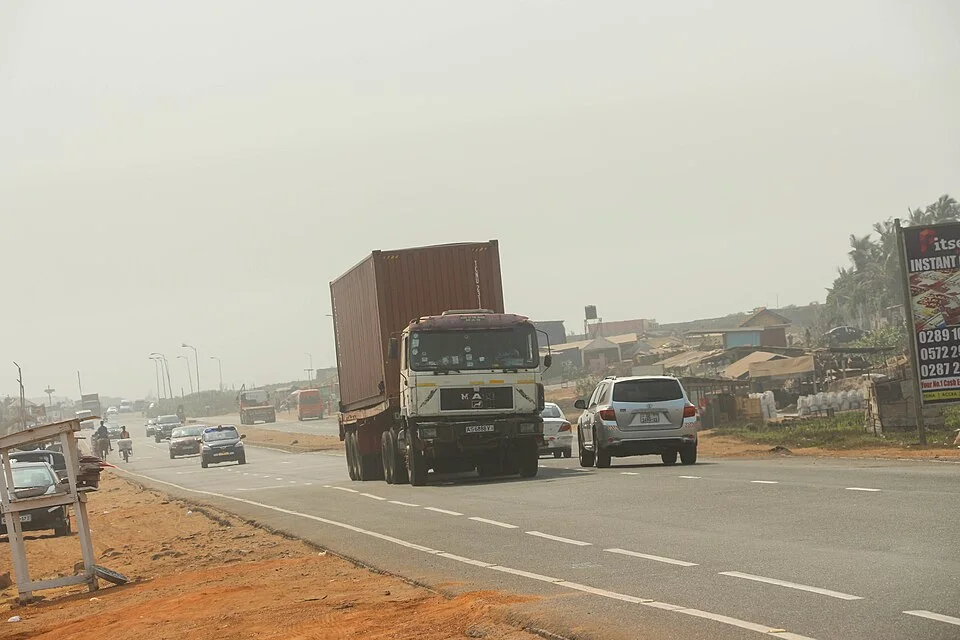
A lorry driver can pass through a new joint border post and still spend the afternoon answering questions at checkpoints farther down the road. That distinction occupied officials and traders at Noépé-Akanu, between Ghana and Togo, during an ECOWAS dialogue on 13 August. Officials acknowledged delays, informal payments, road harassment and inconsistent application of regional rules along the Abidjan–Lagos corridor.
The site was a pointed choice. A joint border post is a physical expression of cooperation. Putting services close together can save a journey between separate offices. But a trader still has to know which official handles a particular document, whether that document will be accepted across the border and what happens when an officer further along the road asks for something else. A dispute that moves from one counter to another remains a cost.
A passenger, a vehicle and a consignment
The ECOWAS Commission brought together representatives responsible for free movement, trade, transport, insurance and customs. A journey can engage all of those functions. The person driving the lorry needs an accepted identity document. The vehicle has its own requirements. The merchandise inside it may be entering a market or merely travelling through one country on the way to another.
Officials discussed the regional biometric identity card and SIGMAT, a customs transit system. Those initiatives address different problems. Showing who is travelling does not establish the customs status of the load. Exchanging information about the load will not by itself remove a checkpoint where the usual process is applied inconsistently. Both tools need staff who understand when each applies and a way to resolve an exception.
A clock that starts before the gate
For a transporter, an improvement is easiest to measure from the customer’s point of view. Record when the vehicle joins the queue, when the consignment is cleared and when it reaches an agreed point beyond the crossing. A shorter wait at the desk could coexist with a longer delay on the approach road. Recording only the clearance transaction would miss part of the journey.
The same exercise looks different for a trader crossing with a small quantity of goods. The time taken to find the right place, learn a requirement or challenge an unexplained charge can be substantial relative to the value of one sale. Women and younger traders took part in the dialogue, giving officials a route to test how procedures work for different users.
ECOWAS reported feedback and recommendations from the meeting. It did not report that waiting times or charges had already fallen. The next evidence worth watching is what happens to a consignment making the same journey twice.