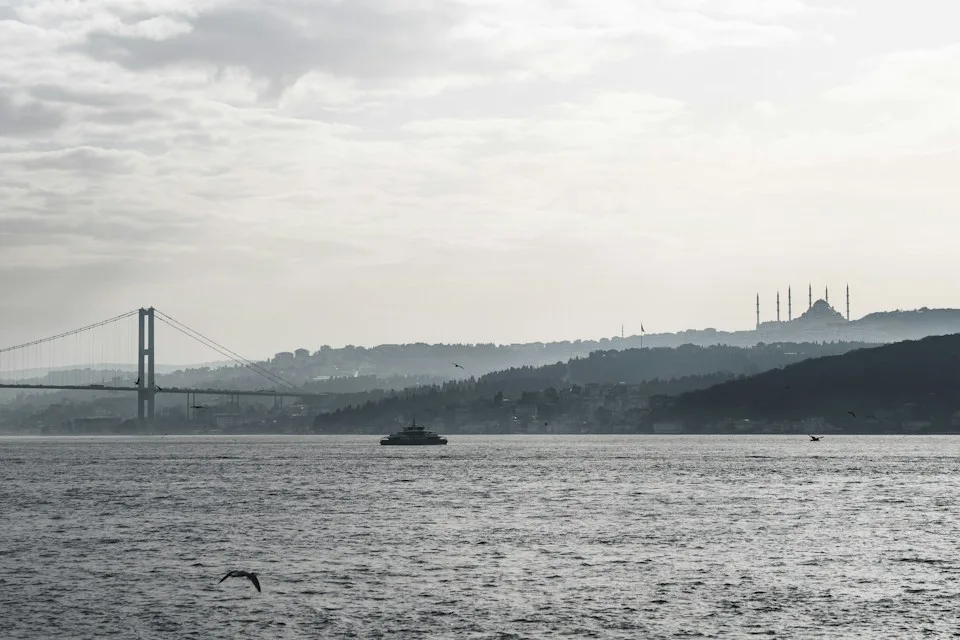
- The route runs from Kanlıca on the Asian side to Kuruçeşme on the European side.
- The maritime notice set out a four-hour closure to through traffic on the Bosphorus.
- Istanbul’s ferry operator listed the individual departures and sightseeing tour affected.
Inside this story 2 perspectives
For most visitors to Istanbul, the simplest way to cross between Asia and Europe on the water is to board a ferry. The city's sporting calendar reserves one Sunday for a crossing made under a swimmer's own power. Today's 38th Bosphorus Cross-Continental Swimming Race follows a route from Kanlıca on the Asian shore to Cemil Topuzlu Park in Kuruçeşme on the European side. Its two ends are recognisable neighbourhood places, a pier and a park.
The tourism calendar lists the event from nine in the morning. A circular from the Turkish Chamber of Shipping gives that hour a second meaning. From 9am to 1pm, the published arrangements called for the Bosphorus to close to through traffic in both directions and for local vessel traffic to stop in the race area. For those four hours, a waterway used to carry people and goods can function as a swimming course.
A race from pier to park
Specifying neighbourhoods matters in a city where advertisements can promise two continents in a single day. Asia and Europe describe the size of the achievement in the event's name. Kanlıca and Kuruçeşme tell a friend where to see someone off or where to meet them afterwards. The starting and finishing points also describe different views of the same strait. A participant leaves one bank and comes ashore among people looking back towards it.
Organising that journey falls to the Turkish Olympic Committee, identified as responsible for the event in the maritime notice. For a spectator without race credentials, the official documents offer a surprisingly vivid way to picture the course. Read the names of the shore locations, then read the list of sailings affected. The second list places the swimmers inside an urban transport network that carries on either side of the race.
The timetable left on shore
Şehir Hatları, the municipal ferry operator, identified particular services it could not run. Its notice includes departures on the Üsküdar–Aşiyan route in both directions as well as the long Bosphorus sightseeing tour. A visitor could arrive in the morning with two perfectly reasonable plans, to watch swimmers arrive or to take a leisurely trip along the strait, and find that one had displaced the other.
The freight passage, the neighbourhood crossing and the sightseeing excursion each make a different demand on this stretch of water. Race day adds another. The most telling detail may be that its documentation exists in more than one place. A sporting calendar tells swimmers when to turn up. A ferry notice tells everyone else what the city has made available to them.