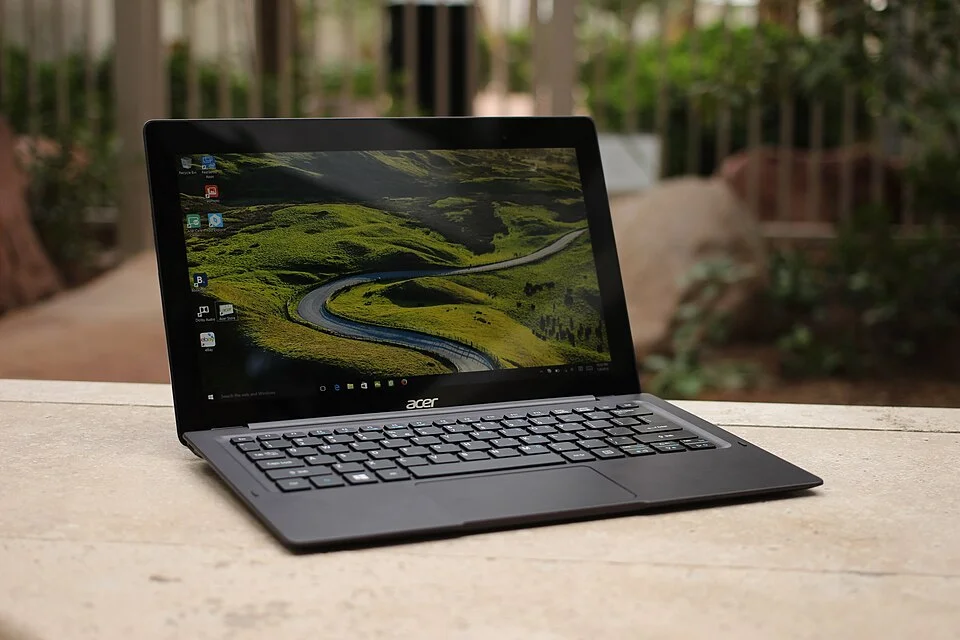
- Acer announced the Vero 16 in Berlin on 2 September.
- The company says users can replace the battery and solid-state drive and open the base without tools.
- Future processor support is a manufacturer commitment, distinct from the parts available at launch.
Inside this story 2 perspectives
The first thing a repairer can lose is the information needed to start the job. The product page has moved, a paper manual is missing or the working computer happens to be the one that needs opening. Acer's Vero 16, announced in Berlin on Wednesday, puts a visual repair guide on the laptop itself. An access latch opens the bottom cover without tools.
The two decisions are small, but they address different parts of the same problem. One gets a person into the machine. The other shows them where to direct their attention. Acer identifies the battery and the solid-state storage drive as parts users can replace themselves. A depleted battery and a full or failing drive are familiar reasons an otherwise serviceable computer can become difficult to use.
Which part has to leave the desk?
A laptop hinge is easy to overlook until the screen no longer stays at the chosen angle. The new model is designed so the hinge can be detached from the chassis. Covers over the input and output ports can also be removed to simplify service. Opening the base without a screwdriver is a particular feature of the access latch. It does not mean every repair inside can be performed by hand.
For someone responsible for a room full of office laptops, the practical appeal would be measured in time and parts. A repairer has to identify the damaged component, obtain its replacement, fit it and check that the computer works. Better access can shorten part of that sequence. It cannot supply a component that is out of stock or tell the owner in advance what a repair shop will charge.
A promise that will take years to test
Acer also says the design will support processor upgrades for at least two generations. A battery replacement returns an existing machine to useful service. A processor upgrade asks it to perform work that may have become more demanding since it was bought. Whether that option is attractive will depend on what compatible parts become available, their cost and how well the rest of the machine still meets its owner's needs.
The Vero announcement includes familiar premium specifications, such as configurations with a 16-inch OLED display. Those can be judged relatively quickly. The unusual claim concerns the things a first reviewer cannot easily observe. Years from now, can the owner still source the right battery, will a technician be able to identify the port assembly, and will the guide still be legible? Engraving the instructions into the product gives at least one of those questions an answer on the day the box is opened.